
Afghan Recipes
Afghan Tomato Soup Aush Goshti
Aush is the soup every Afghan grandmother makes a little differently, and the goshti (with-meat) version is the one I reach for when the evenings turn cold. The first time I cooked it, I rushed the tomato paste and the broth tasted thin and raw. Blooming that paste in hot oil until it darkens is the whole secret.

Why This Aush Goshti Works
Most tomato soups lean sweet or one-note. Aush Goshti stays savory and layered because three things happen in the same pot: the beef browns and leaves flavorful fond, the tomato paste caramelizes into a jammy base, and the beans and noodles thicken the broth as they finish cooking. Nothing gets watered down.
The finishing touches are what make people ask for the recipe. Dried mint stirred in at the end tastes completely different from mint added early. It stays bright and almost peppery. And the chaka, a quick garlic-yogurt sauce, cuts the richness the way sour cream does for chili, but lighter.
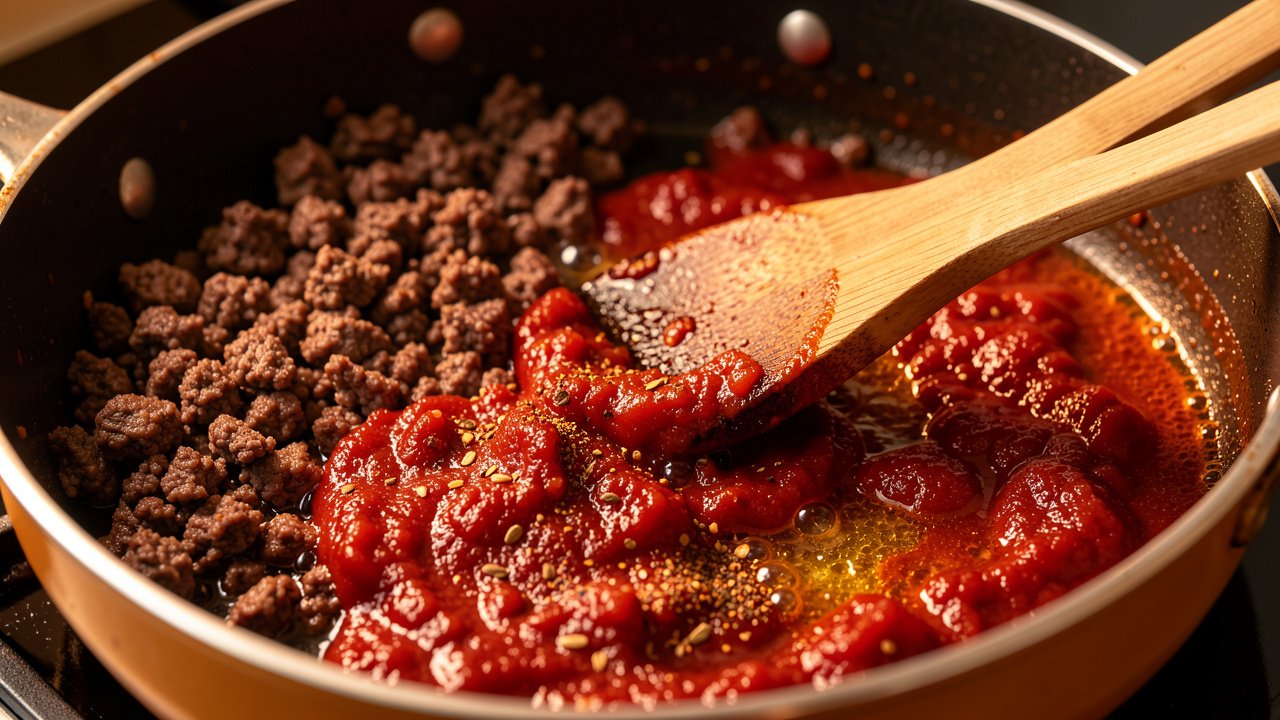
Pro observation: You will know the tomato base is ready when the paste turns from bright red to a deep brick color and the oil around the edges runs orange. That color is flavor, so do not skip it.
Ingredients
Ingredient Notes & Substitutions
Ground Beef or Lamb
Traditional aush often uses ground lamb for a richer, gamier flavor. Lean beef (about 85%) is the everyday choice and keeps enough fat to build fond. For a lighter bowl, ground turkey works, but add an extra tablespoon of oil.
Tomatoes & Paste
Fresh grated tomatoes give the brightest flavor in summer. Out of season, one 14-ounce can of crushed tomatoes beats pale winter tomatoes. The tomato paste is non-negotiable, because it builds the depth.
Beans
Kidney beans and chickpeas are the classic pair. Canned is fine and fast; just drain and rinse. If you cook dried beans, add them already tender, or they will never soften in the acidic broth.
Noodles
Afghan aush noodles are flat, like a thin linguine. Broken linguine or fettuccine is the closest swap. Spaghetti works too. Cook it right in the soup so it drinks up the tomato flavor, and add it late enough that it finishes just before you serve.
Equipment
- Large heavy pot or Dutch oven
- Wooden spoon
- Box grater for tomatoes
- Sharp knife and board
- Small bowl for chaka
- Colander for the beans
Before You Start
1. Prep everything first. This soup moves quickly once the paste blooms. Chop the onion, mince the garlic, drain the beans, and measure the spices before the pot goes on.
2. Break the noodles now. Snap the linguine into two-inch pieces so it is ready to drop straight into the simmering broth.
3. Make the chaka early. The garlic-yogurt sauce tastes better after 15 minutes of resting, so stir it together before you start browning the meat.
Step-by-Step Instructions
Brown the Beef and Onion
Heat 2 tablespoons of oil in a large pot over medium-high. Add the chopped onion and cook 4 to 5 minutes until it softens and the edges turn golden. Add the ground beef, breaking it up with a spoon. Cook 6 to 7 minutes until no pink remains and it starts to fry rather than steam. That browning is building your base.
Bloom the Tomato Paste and Spices
Push the meat to one side. Add the garlic, tomato paste, coriander, turmeric, cinnamon, salt, and pepper to the cleared space. Fry the paste in the oil for 2 to 3 minutes, stirring, until it darkens to a deep brick red and smells sweet and toasty. This removes the raw, tinny taste and is the difference between a flat soup and a rich one.
Add Tomatoes, Beans, and Broth
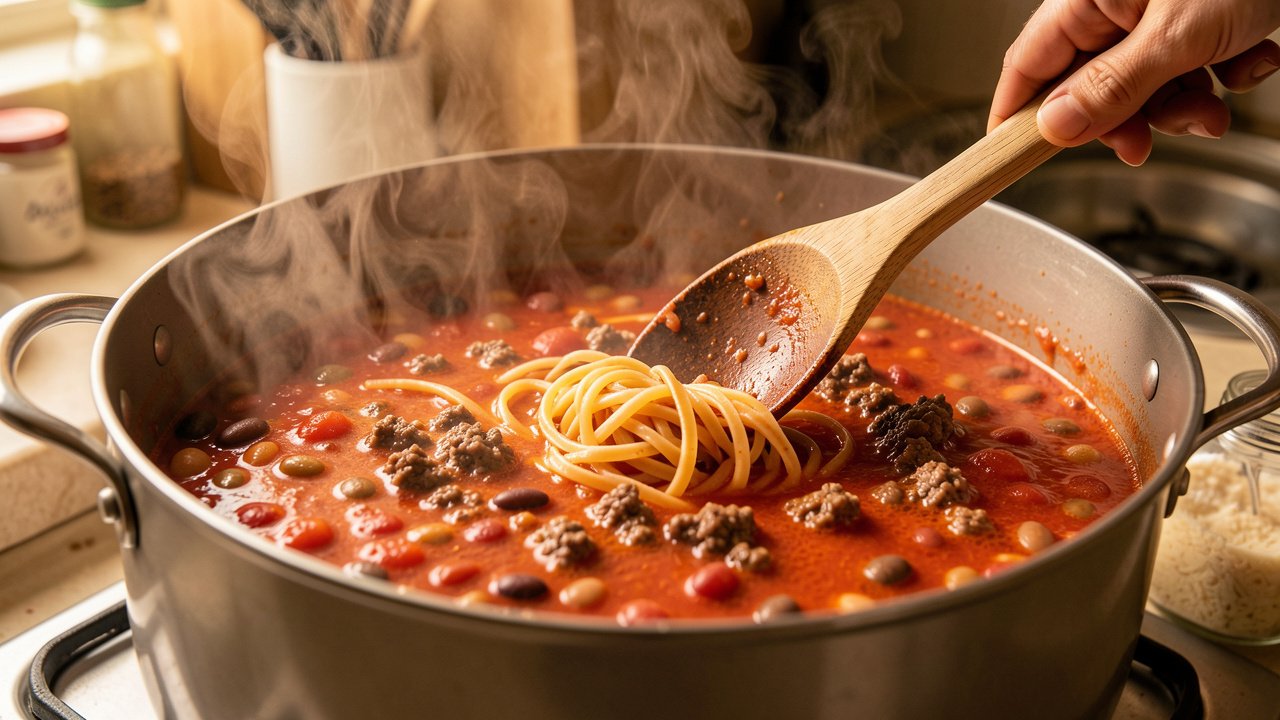
Stir in the grated fresh tomatoes (or crushed canned) and let them cook down for 3 minutes. Add the kidney beans, chickpeas, and 6 cups of broth. Bring to a boil, then lower to a gentle simmer. Cover partly and cook 20 minutes so the flavors marry and the beans soak up the broth.
Cook the Noodles Right in the Soup
Drop the broken linguine straight into the simmering soup. Stir well so it does not clump, then cook 9 to 11 minutes until the noodles are tender. The starch they release thickens the broth to a silky, spoon-coating body. If it gets too thick, splash in a little more broth or hot water.
Make the Chaka (Garlic Yogurt)
In a small bowl, stir together 1 cup of plain yogurt, 1 grated garlic clove, and a pinch of salt. Loosen with a tablespoon of water if you want it pourable. Set it aside. It should taste sharp and garlicky, because it mellows against the hot soup.
Finish with Mint and Serve
Turn off the heat. Stir in 1 tablespoon of dried mint and most of the fresh cilantro. Taste and add salt if needed. Ladle into bowls, drizzle generously with chaka, and finish with the remaining dried mint and cilantro. Serve hot with warm flatbread.

Chef’s Tips From Real Kitchen Testing
Add the dried mint off the heat. Simmering it turns the flavor muddy and grassy; stirring it in at the end keeps that bright, almost menthol lift that defines aush.
For the traditional deeper tang, some cooks stir in a spoon of qroot (dried fermented whey). A tablespoon of the chaka yogurt whisked into the pot off the heat gives a similar creamy tang without hunting for qroot.
Undercook the noodles by a minute if you plan to reheat leftovers. They keep absorbing broth overnight and can turn soft, so pull them while still al dente.
Recipe Variations
Serving Suggestions
- Warm Afghan naan or any flatbread for scooping
- A simple cucumber and onion salad on the side
- Extra chaka and dried mint at the table
- A squeeze of lemon for anyone who likes it sharper
Nutrition Facts
Values are estimates per serving and vary with the meat, broth, and beans you use.
Make-Ahead Tips
The soup base (through step 3, before the noodles) actually deepens overnight in the fridge. The spices settle and the tomato loses its raw edge, so a make-ahead pot often tastes better than one served the same hour. Make it a day ahead, then reheat and cook the noodles fresh right before serving so they stay al dente. The chaka keeps for 3 days, covered, in the fridge; give it a quick stir before drizzling.
Storage, Freezing & Reheating
Common Mistakes to Avoid
Troubleshooting
Broth tastes flat? It usually needs salt, then a stir of dried mint. Tomato and beans both need generous seasoning.
Soup too thick? The noodles and beans drank the broth. Loosen with hot broth or water, a little at a time.
Too acidic? A pinch of sugar or an extra spoon of yogurt chaka rounds it out fast.
A Little About Aush
Aush simply means noodle soup across Afghan and Persian kitchens, and it appears at everything from weeknight dinners to Nowruz celebrations. The goshti label marks the meat version. What ties every regional take together is the trio of finishing flavors, dried mint, garlic, and yogurt, layered over a humble base of beans, noodles, and tomato. It is comfort food in the best sense: affordable, filling, and endlessly welcoming. If you like this style of bowl, our hearty tomato lentil soup follows the same generous, spiced spirit.
Frequently Asked Questions
More Tomato Recipes to Try
Culinary Reviewer: Ghazala Shakeel
Last updated: [mc_modified_date]

Urooj Mukhtar is a classically trained chef and food blogger at TomatoAnswers.com, creating healthy, seasonal, plant-based recipes that put tomatoes at the center of the plate. She focuses on making nutritious, flavour-forward home cooking both accessible and delicious.