Caribbean Recipes
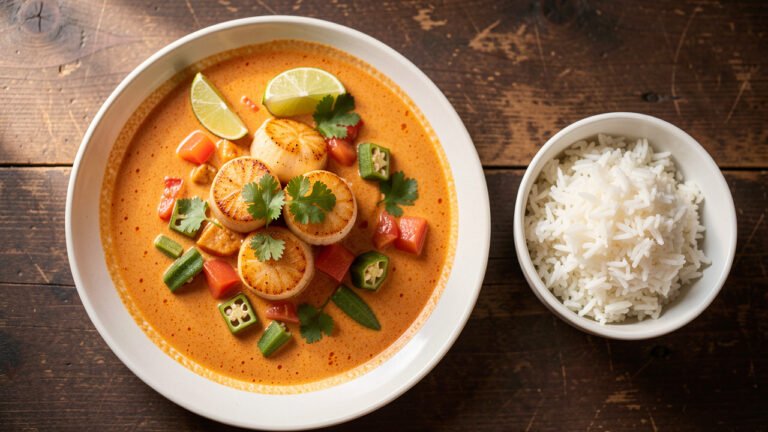
Scallops, Okra, and Tomatoes in Coconut Curry Sauce Recipe Seared Scallops, Silky Okra
This is a dish about timing more than technique. Seared scallops turn rubbery in seconds and okra turns slippery just as fast, so the trick is cooking each one exactly to its point and no further. Get that right and you have a coastal curry that tastes like far more work than it is.
Why This Scallops and Okra Coconut Curry Works
The whole recipe is built around one idea: cook the scallops separately from the sauce. Scallops need blazing heat for a short burst to build a crust, while the curry needs a slower, gentler simmer. Trying to do both in one step is how you end up with tough scallops in a thin sauce.
So you sear the scallops hard, pull them out, and let the same pan carry all that browned flavor into the curry base. The okra, tomatoes, and coconut milk then simmer on their own schedule, and the scallops slide back in only at the very end to warm through. Two minutes in the pan is all they need at that point.
Tomatoes do quiet double duty here. They bring the sweet-tart backbone that balances the rich coconut milk, and their acidity actively fights okra sliminess, cutting the sticky pods release when they cook. That is why this combination shows up again and again in Caribbean and West African kitchens; the tomato is not just flavor, it is insurance.
Coconut milk keeps the sauce light rather than heavy. You want a loose, spoonable curry that pools around the scallops, not a thick gravy that buries them. A short simmer is enough to marry the curry spices with the coconut without dulling the fresh, briny sweetness of the seafood.
Pro observation: A dry scallop is a browned scallop. If moisture beads on the surface as it hits the pan, it will steam and go gray instead of golden. Pat them until the paper towel comes away dry, then sear.
Ingredients
Kitchen Measurement Converter
Quickly convert between common cooking measurements without leaving the recipe. Pick a category, enter a value, and the result updates instantly.
Ingredient Notes & Substitutions
Scallops
Buy dry-packed sea scallops if you can. Wet-packed scallops are soaked in a solution that makes them weep water and refuse to brown. Ask the fishmonger, or look for scallops labeled dry or diver.
Okra
Choose small, firm pods under four inches; big ones turn woody and slimy. Fresh is best here, but frozen cut okra works if you add it straight from frozen and do not stir it too much.
Tomatoes
Ripe red tomatoes give the tang that tames the okra. Out of season, half a 14-ounce can of chopped tomatoes is more reliable than pale winter ones and brings the same useful acidity.
Coconut Milk
Full-fat canned coconut milk keeps the sauce silky. Shake the can well before opening so the cream and water blend. Light coconut milk works but gives a thinner, less rounded curry.
Equipment
- Wide heavy skillet or saute pan
- Tongs or fish spatula
- Sharp knife and board
- Paper towels
- Measuring spoons
- Plate for resting scallops
Before You Start
1. Dry the scallops early. Pat them, then leave them uncovered on a paper towel while you prep everything else. A drier surface means a better crust.
2. Slice the okra just before cooking. Cut pods release the most stickiness once exposed, so hold off until the pan is nearly ready, and keep the slices on the thicker side.
3. Get your rice going first. This curry comes together fast at the end, so have steamed rice ready to catch the sauce the moment the scallops go back in.
Step-by-Step Instructions
Dry and Season the Scallops
Pull the small side muscle off each scallop if it is still attached. Pat them very dry on both sides with paper towels, pressing gently until no moisture shows. Season with salt just before searing, since salting too early draws water back out. Set them by the stove so you can move fast.
Sear the Scallops Hard
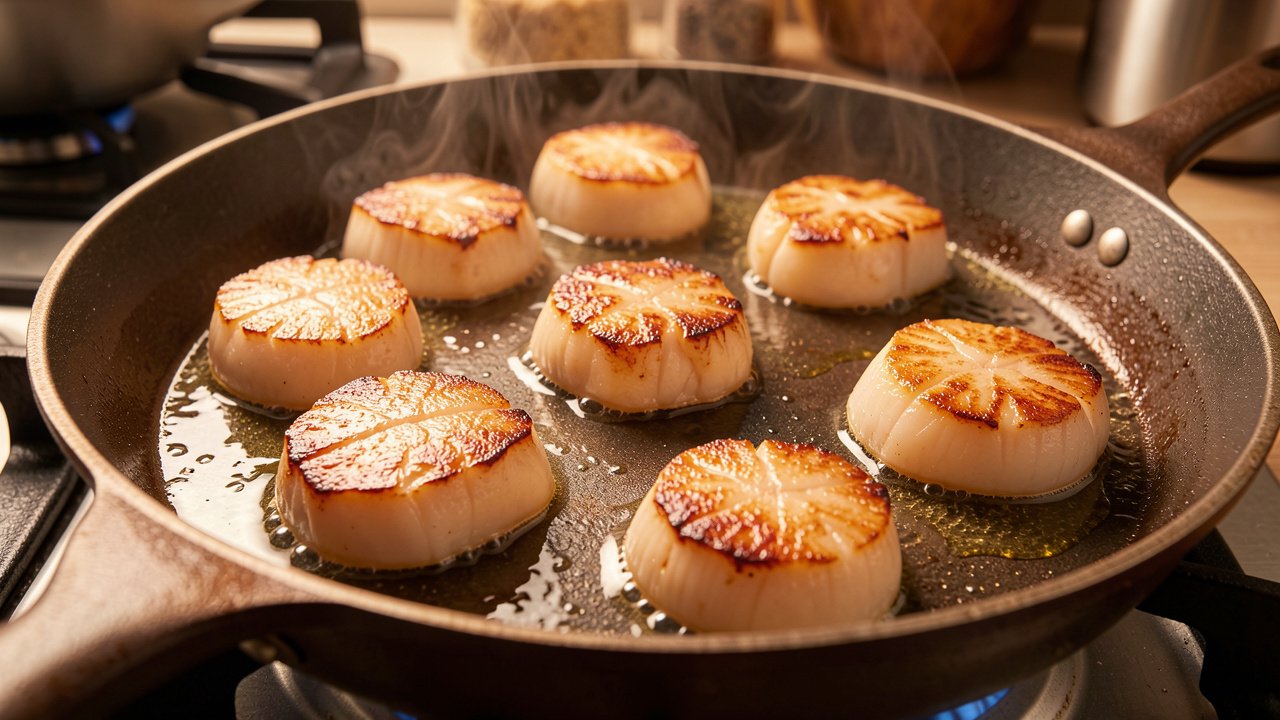
Heat 1 tablespoon of oil in a wide skillet over medium-high until it shimmers and is almost smoking. Lay the scallops down without crowding, leaving space between each one so they sear instead of steam. Do not move them for 1 to 2 minutes, until a deep golden crust forms, then flip and give the second side 1 minute. Pull them onto a plate while the centers are still just translucent; they will finish later.
Build the Curry Base
Lower the heat to medium and add the remaining tablespoon of oil to the same pan. Add the onion and cook 4 to 5 minutes until soft, scraping up the browned bits the scallops left behind. Stir in the garlic, ginger, and curry powder along with the turmeric, and cook 1 minute until the spices smell toasty and fragrant.
Add Okra and Tomatoes
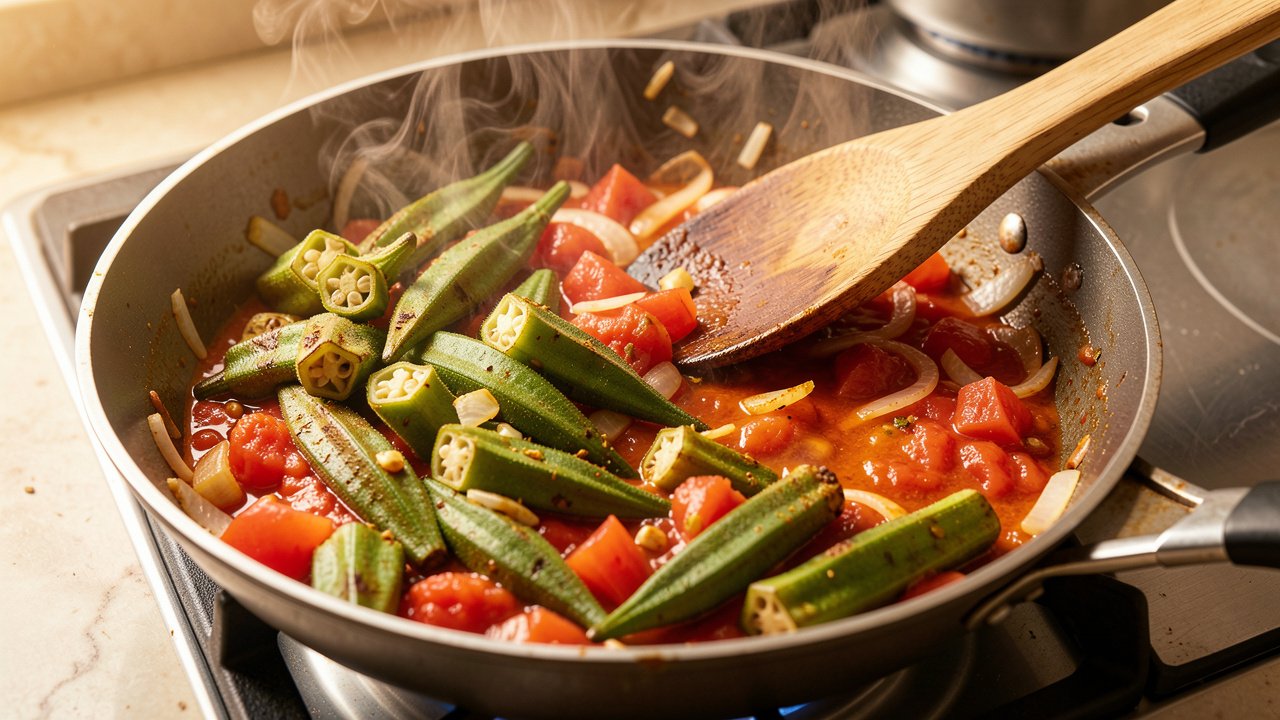
Turn the heat back up to medium-high and add the okra and tomatoes. Cook 4 to 5 minutes, stirring only occasionally, letting the okra pick up some color and the tomatoes start to break down. The higher heat and the tomato acidity work together here to keep the okra from turning slippery, so resist the urge to stir constantly.
Simmer in Coconut Milk
Pour in the coconut milk and add a good pinch of salt. Bring it to a gentle simmer, then lower the heat and cook 6 to 8 minutes, until the okra is tender when you pierce it but still holds its shape. Do not let it boil hard, or the coconut milk can split. Taste and adjust the salt and curry powder now, while there is still time to fix it.
Return the Scallops and Finish
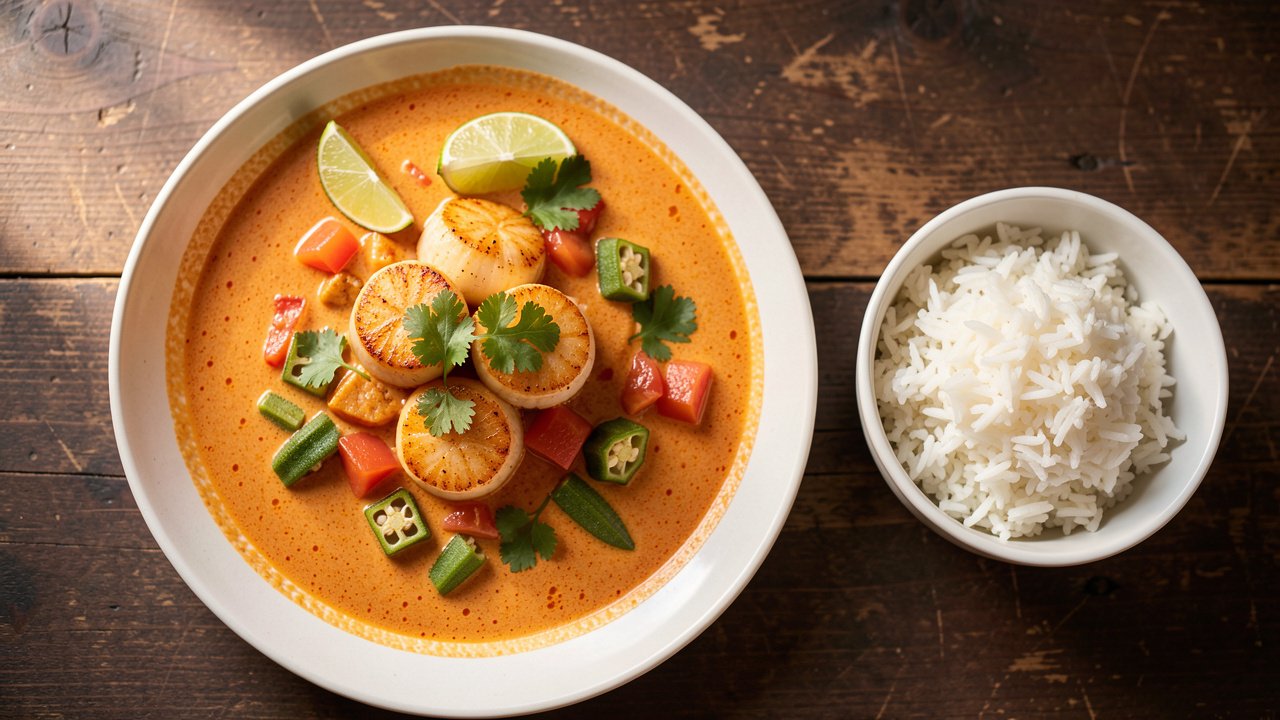
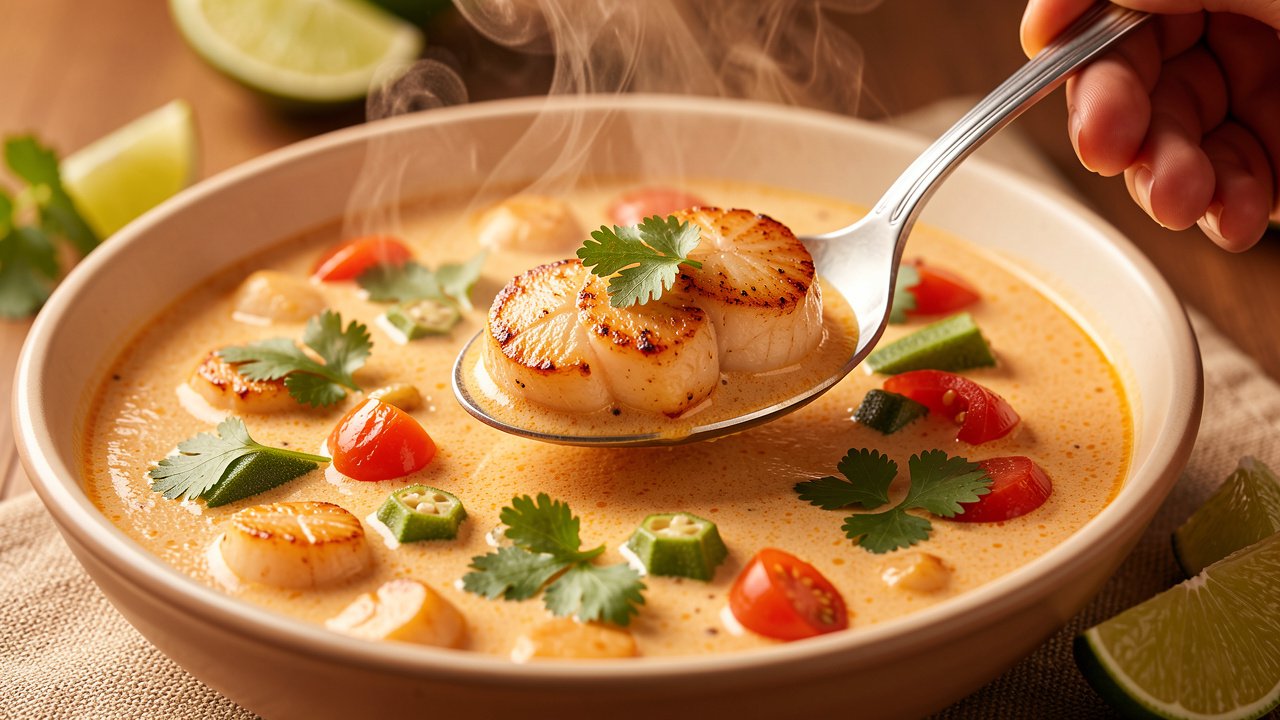
Nestle the seared scallops back into the sauce along with any juices from the plate. Spoon a little curry over them and cook just 1 to 2 minutes, only until they are warmed through and barely firm. Squeeze in the lime, scatter the cilantro, and serve right away over rice. The scallops should stay tender, not bounce back like rubber.
Chef’s Tips From Real Kitchen Testing
Work in batches when you sear. A crowded pan drops in temperature and the scallops steam. If your skillet is small, sear half, rest them, then do the rest.
Undercook the scallops on purpose during the sear. They keep cooking off the heat and get a final gentle minute in the sauce, so pulling them early is what keeps them silky.
Add a splash of lime or extra tomato if the okra ever starts feeling ropey. Acid is the fastest fix for sliminess, and it brightens the whole curry at the same time.
Recipe Variations
Serving Suggestions
- Steamed white rice or coconut rice to soak up the sauce
- Rice and peas, the classic Caribbean pairing
- Warm flatbread or roti for scooping
- Lime wedges and a scatter of fresh cilantro
Nutrition Facts
Values are estimates per serving of curry, without rice, and vary with the coconut milk and scallop size you use.
Make-Ahead Tips
This dish rewards a little planning. You can make the okra, tomato, and coconut curry base up to a day ahead and keep it in the fridge, since the flavors settle nicely overnight. Sear the scallops fresh just before serving, then reheat the base gently and slide the scallops in at the end. Scallops do not hold well once cooked, so keep that final step for the moment you eat.
Storage, Freezing & Reheating
Common Mistakes to Avoid
Troubleshooting
Scallops turned rubbery? They cooked too long. Next time sear less and warm them in the sauce for barely a minute; there is no fix once they are overdone.
Okra came out slimy? The heat was too low or you stirred too much. Bump the heat, add a squeeze of lime or extra tomato, and stir less.
Sauce split or grainy? The coconut milk boiled too hard. Lower the heat and whisk in a splash of warm water to bring it back together.
A Note on Caribbean Coconut Curries
Coconut, curry spice, and okra travel together across the Caribbean, carried by Indian and West African cooking traditions that took root on the islands. Seafood curries lean lighter than their meat cousins, letting the sweetness of the shellfish shine. If you like bright seafood in a sauce, our spicy tomato shrimp pasta hits a similar note, while our creamy Indian tomato soup and hearty tomato lentil soup share the same warming spice. For more on why tomatoes anchor so many healthy meals, see our guide to tomatoes in the Mediterranean diet.
Frequently Asked Questions
More Tomato Recipes to Try
Culinary Reviewer: Ghazala Shakeel
Last updated: [mc_modified_date]

Urooj Mukhtar is a classically trained chef and food blogger at TomatoAnswers.com, creating healthy, seasonal, plant-based recipes that put tomatoes at the center of the plate. She focuses on making nutritious, flavour-forward home cooking both accessible and delicious.