Classic Tomato Mozzarella Salad Recipe
Caprese salad only works when every ingredient pulls its weight, and that's exactly what happens here. Ripe, in-season tomatoes bring natural sweetness, fresh mozzarella adds a creamy, milky contrast, and good balsamic vinegar ties the plate together with just enough tang.
This recipe skips shortcuts like pre-shredded cheese or bottled dressing, because both dull the flavor this dish depends on. You're building a platter, not cooking a meal, so most of the work is slicing, arranging, and timing the dressing so the tomatoes never sit in liquid long enough to turn the plate watery.
- 10 minPrep time
- 0 minCook time
- 10 minTotal time
- 6Servings
- 199Calories/serving
- Platter + jarEquipment

Why This Recipe Works
The oil-to-vinegar ratio here (equal parts) is deliberately balanced so the balsamic doesn't overpower the tomatoes. Too much vinegar and the salad tastes sharp instead of bright.
Salting happens in the dressing, not directly on the sliced tomatoes, which keeps them from weeping extra liquid onto the platter before serving. Letting the mozzarella sit at room temperature for a few minutes softens it just enough to release its milky flavor, which stays muted and rubbery straight out of the fridge.
Ingredients
-
No ripe slicing tomatoes? Use halved cherry tomatoes or well-drained canned whole tomatoes — the flavor holds up, though the texture will be softer.
-
Bocconcini or burrata both work if sliced fresh mozzarella isn't available. For dairy-free, use a firm plant-based mozzarella alternative.
-
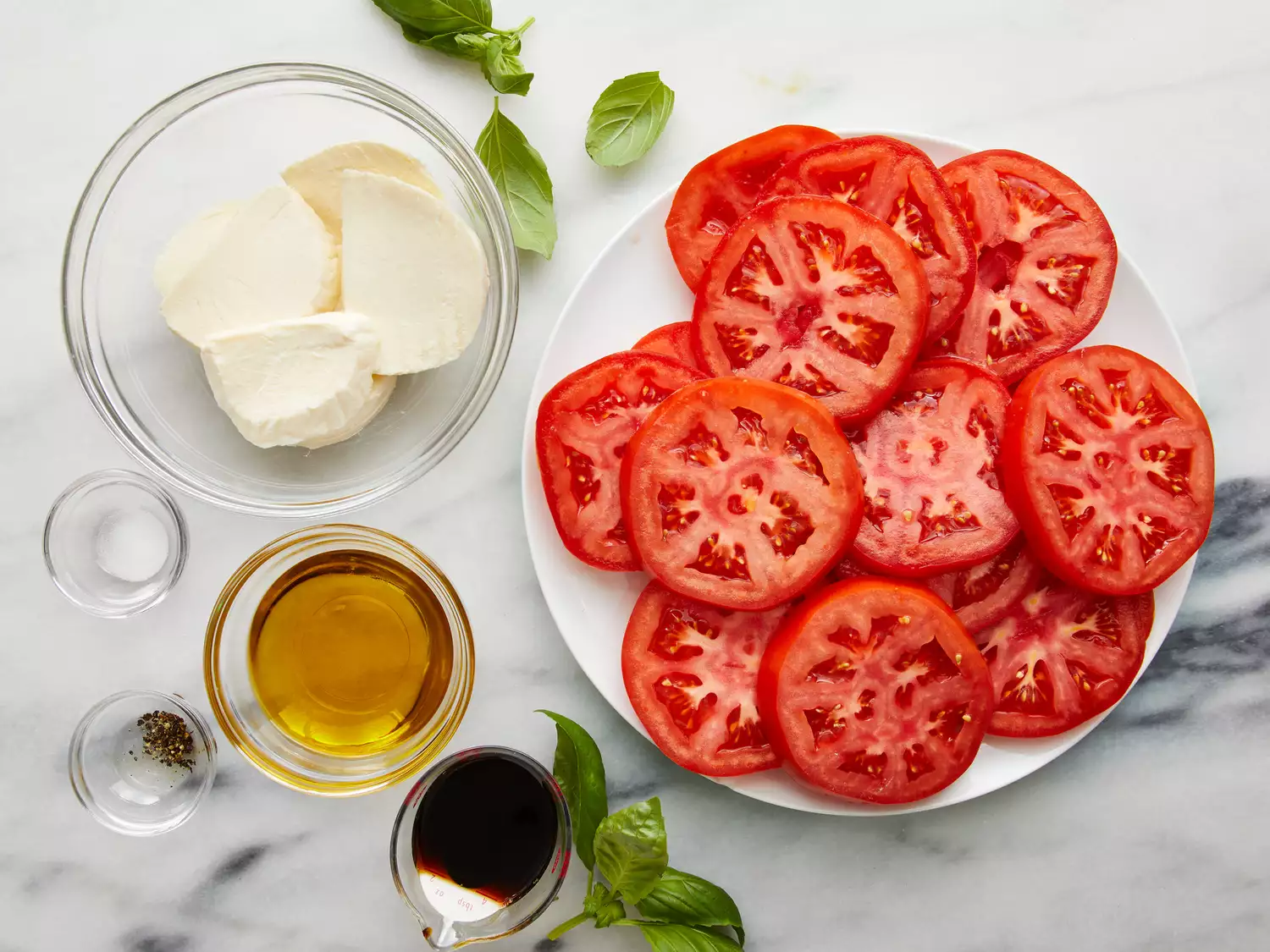
Use a fruity extra-virgin olive oil — it's a main flavor here, not a background ingredient.
-
Red wine vinegar with a pinch of sugar works in a pinch, though it won't have balsamic's deep sweetness.
-
Fine sea salt dissolves fastest into the dressing; kosher salt works too, just shake a little longer.
-
Freshly cracked pepper has noticeably more bite than pre-ground — worth grinding it to order.
-
Dried basil won't give the same fresh aroma; if fresh basil isn't available, fresh mint or arugula are better swaps than dried herbs.
Ingredient Notes and Substitutions
Buy tomatoes that give slightly under gentle pressure and smell like tomato at the stem end — that's the surest sign of ripeness at the store. Heirlooms, beefsteaks, and vine-ripened round tomatoes all work well; avoid tomatoes that feel hard or have no smell, since they won't soften or sweeten after picking.
For mozzarella, fior di latte (cow's milk) is the standard choice and holds its shape well when sliced. Buffalo mozzarella is richer and softer but can turn the platter watery if it's very fresh and wet — pat it dry first.
Balsamic vinegar quality matters more than brand names suggest: look for one labeled "aceto balsamico di Modena" with no added caramel color listed first on the ingredient list, which usually signals a thicker, less harsh vinegar.
Equipment
- Large serving platter — flat and wide enough to lay slices in a single layer
- Sharp chef's knife or serrated knife for clean tomato slices
- Cutting board
- Small jar with a tight-fitting lid, for shaking the dressing (a bowl and whisk work too)
- Measuring cups and spoons
Before You Start
Pull the mozzarella out of the fridge about 20 to 30 minutes before you plan to serve — cold mozzarella tastes flat and feels rubbery. Rinse and thoroughly dry the basil, since wet basil bruises and turns dark faster when minced.
If your tomatoes feel especially juicy, slice them first and let them sit on a paper towel for a few minutes to draw off surface moisture before plating. Have your platter out and ready so slices go straight from the board to the plate.
Step-by-Step Instructions
Progress: 0%-
1
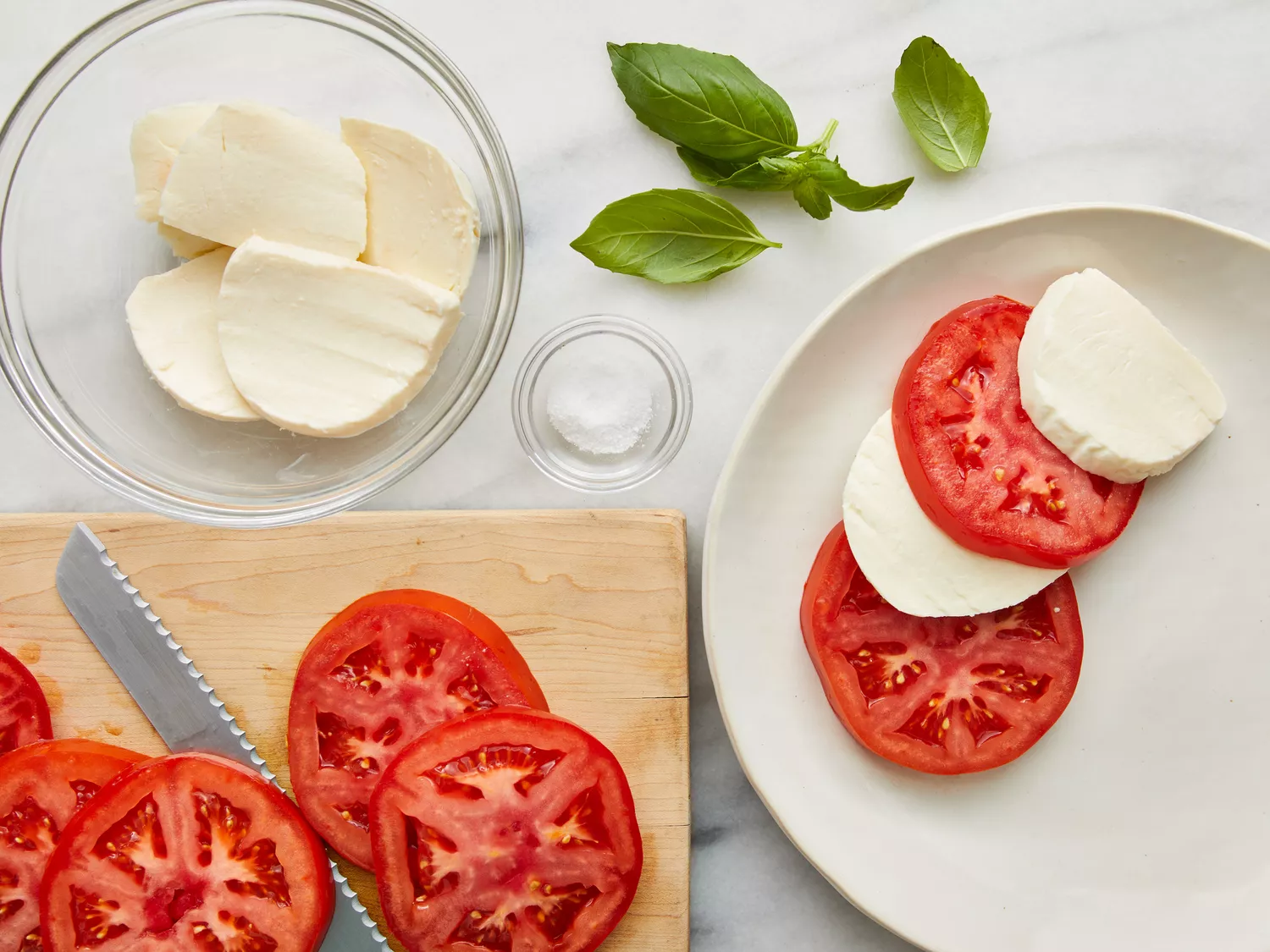
Slice the tomatoes and mozzarella. Cut both into rounds about ¼ inch thick. You'll see beads of juice forming on the cut side of the tomatoes almost immediately — press a paper towel against each slice for a few seconds to soak that up.
Why blotting matters
Skipping this step is the single biggest reason caprese salad turns into a puddle on the platter within 20 minutes. A few seconds of blotting per slice makes a real difference.
-
2
Arrange on the platter. Alternate tomato and mozzarella slices, overlapping them slightly in a line or a fan. Aim for even color distribution — clusters of all-red or all-white look less appetizing than an alternating pattern.
-
3
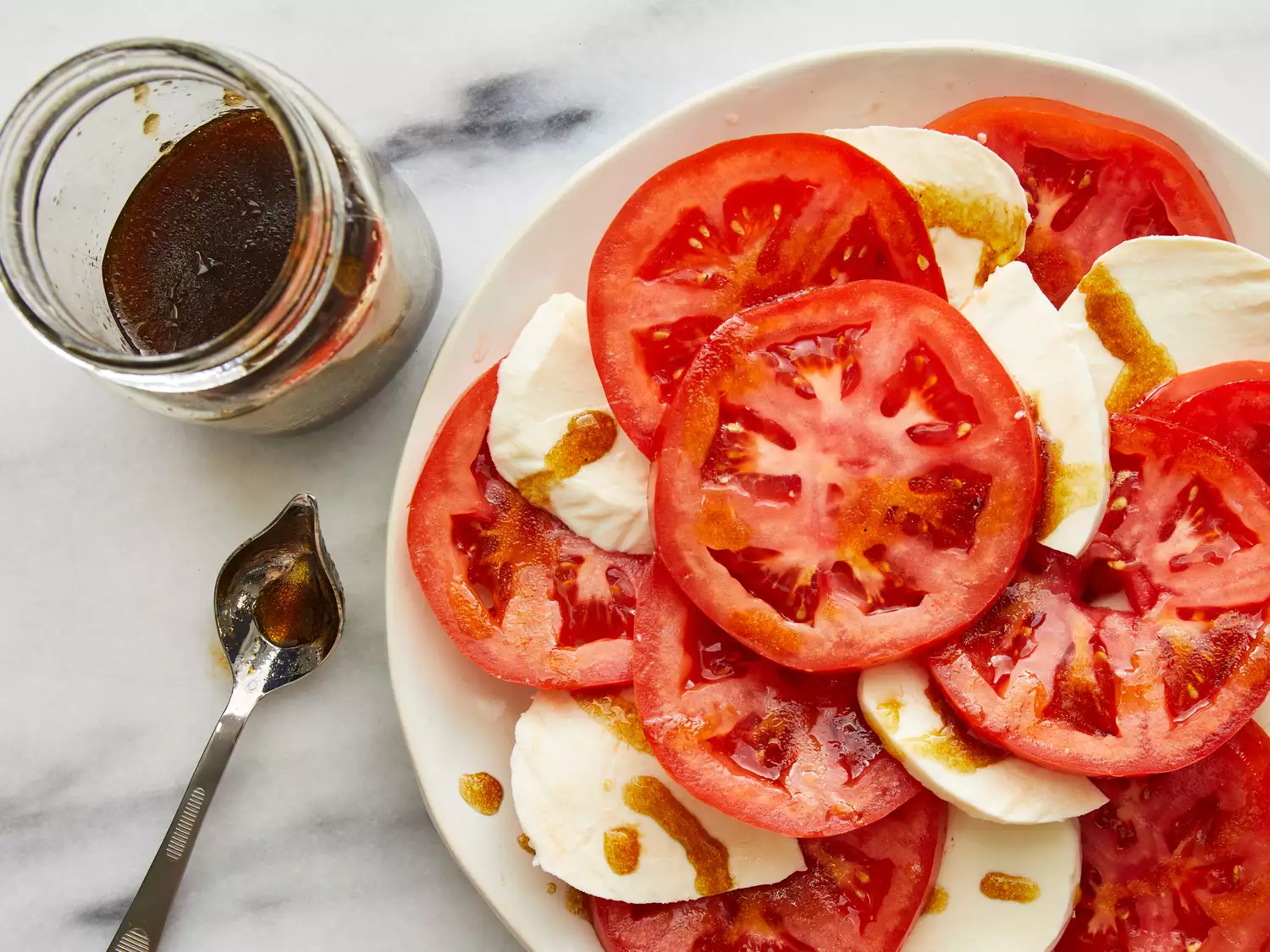
Make the dressing. Combine the olive oil, balsamic vinegar, salt, and pepper in the lidded jar. Shake hard for 15 to 20 seconds. Listen for the sound to change from a thin, watery slosh to a slightly thicker, quieter shake — that's the emulsion coming together.
Why shake instead of whisk
A tight-lidded jar builds more force in less time than a whisk, and it means one less bowl to wash. If the dressing separates again while it sits, just give it another quick shake right before pouring.
-
4
Drizzle the dressing over the platter. Pour it evenly across the tomato and mozzarella slices right before serving, not earlier. You should see a light, glossy sheen on every slice, not pooling in one spot.
-
5
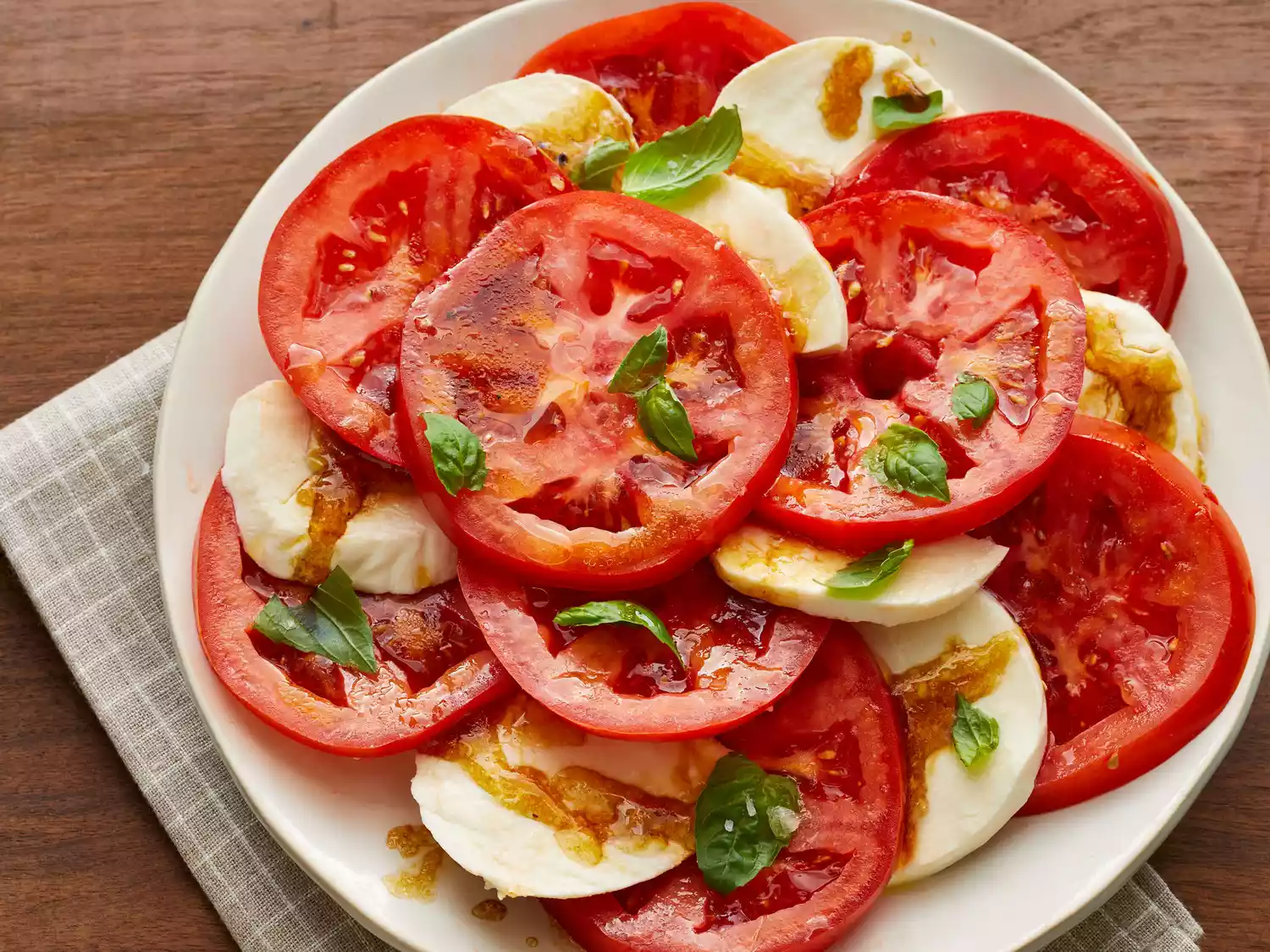
Scatter the basil and serve. Sprinkle the minced basil over the top and serve within about 15 minutes, while everything is still at room temperature and the mozzarella is at its softest.
Chef's Tips
Choosing the right mozzarella texture
Firmer, low-moisture mozzarella slices cleaner and holds up longer on the platter, while very fresh, wet mozzarella tastes richer but needs to be patted dry and served sooner.
Building the platter in stages ahead of time
Slice everything and store tomatoes and mozzarella separately, covered, in the fridge up to 4 hours ahead. Bring both to room temperature and assemble only once you're ready to dress and serve.
Knife angle for cleaner slices
Use a gentle sawing motion with a serrated or very sharp knife rather than pressing straight down — pressing down squeezes juice out of the tomato before it even hits the plate.
Serving temperature changes the flavor
Cold mutes both sweetness in the tomato and the milky flavor in the mozzarella. Room temperature is not just a texture preference here — it genuinely changes how the dish tastes.
Recipe Variations
The base recipe is already vegetarian, gluten-free, and naturally low-carb, so those aren't listed as separate variations below — only changes that require real ingredient swaps are included.
Vegan / Dairy-Free
Swap the mozzarella for a firm, block-style plant-based mozzarella alternative, sliced the same way. Add an extra pinch of salt, since dairy-free mozzarella tends to be blander than the real thing.
Spicy Caprese
Add a pinch of crushed red pepper flakes to the dressing before shaking, or scatter thin slices of fresh red chile over the top along with the basil.
Kid-Friendly Version
Cut the balsamic vinegar to 2 tablespoons and add ½ teaspoon honey to soften the tang. Use mini mozzarella balls (bocconcini) so the pieces are easier for small hands to eat.
Serving Suggestions
Serve this salad as a starter with warm, crusty bread for soaking up the extra dressing, or alongside a tomato basil pasta for a full Italian-style meal. It also pairs well next to grilled chicken or fish as a bright, no-cook side.
For a heartier plate, add it as a topping over a tomato and cheese pizza right after it comes out of the oven, so the residual heat barely warms the mozzarella without cooking it.
Nutrition Facts
Estimated per serving (1 of 6 servings, based on original recipe quantities). These values are estimates only and will shift with the serving-size adjuster above.
- 199Calories
- 10 gProtein
- 6 gCarbohydrates
- 15 gTotal Fat
- 5 gSaturated Fat
- 1 gFiber
- 4 gSugars
- 338 mgSodium
- 24 mgCholesterol
- 12 mgVitamin C
- 311 mgCalcium
- 1 mgIron
- 261 mgPotassium
Make-Ahead Tips
Slice the tomatoes and mozzarella and mix the dressing up to 4 hours ahead, storing each separately in the fridge. Keep the basil whole and mince it just before serving, since cut basil darkens quickly.
Do not assemble and dress the platter ahead of time — it's the one step that genuinely can't be rushed early without losing texture.
Storage, Freezing, and Reheating
Leftovers keep in the fridge for up to 1 day in an airtight container, though the texture softens noticeably. Layer paper towels between rows of salad to absorb extra moisture as it sits.
This salad does not freeze — both tomatoes and fresh mozzarella turn mushy and watery once thawed. It also isn't meant to be reheated; serve any leftovers cold or let them come back to room temperature instead.
Common Mistakes to Avoid
- Using cold, underripe tomatoes. They stay firm and starchy instead of sweet, no matter how good the dressing is.
- Slicing mozzarella too thin. Paper-thin slices get lost next to the tomato and disappear in texture and flavor.
- Dressing the platter too early. Salt and acid pull water out of the tomatoes fast, so the plate turns soupy within 30 minutes.
- Skipping the blotting step. Wet tomato slices dilute the dressing and make the whole platter taste watered down.
- Serving straight from the fridge. Cold mozzarella turns rubbery and mutes the tomato's sweetness.
Troubleshooting
- Platter already looks watery? Drain off the excess liquid, pat the slices dry, and spoon on a small amount of fresh dressing before serving.
- Dressing separated after sitting? Pour it back into the jar and shake again for 10 to 15 seconds — it re-emulsifies quickly.
- Tomatoes taste bland or out of season? Add a small pinch of sugar and an extra pinch of salt to the dressing to sharpen the flavor.
- Dressing tastes too sharp or acidic? Whisk in an extra teaspoon of olive oil or a few drops of honey to round it out.
Wine and Beverage Pairing
A crisp Italian white like Pinot Grigio or Vermentino cuts through the balsamic without competing with the tomatoes. If you'd rather have red, choose something light and low-tannin, like a chilled Chianti. For a non-alcoholic option, sparkling water with a squeeze of lemon and a basil leaf works well.
Historical and Cultural Background
Insalata Caprese takes its name from the island of Capri, where it's said to have first been served in the 1920s and 1950s to reflect the colors of the Italian flag: red tomato, white mozzarella, and green basil. It was originally a simple dish for local fishermen and farmers rather than a restaurant creation, built entirely around whatever tomatoes and cheese were freshest that day — which is still the whole point of making it well today.
FAQs
Is tomato mozzarella salad served cold or at room temperature?
Room temperature. Chilling mutes the tomato's sweetness and makes the mozzarella feel rubbery instead of creamy.
Can I use pre-sliced deli mozzarella?
You can, but fresh mozzarella packed in liquid has a noticeably softer texture and milkier flavor that deli-style low-moisture mozzarella doesn't match.
What's the best tomato variety for this recipe?
Vine-ripened beefsteak or heirloom tomatoes give the best balance of sweetness and juiciness; avoid tomatoes still tinged green near the stem.
How many calories are in tomato mozzarella salad?
About 199 calories per serving with this recipe's ingredient ratios, based on 6 servings from the full batch.
Can this be turned into a full meal?
Yes — add cooked white beans or grilled chicken on the side, or serve it over pasta, to turn the salad into a main course.
Does this work with yellow or heirloom tomatoes?
Yes, and mixing colors actually makes the platter more visually striking. Just adjust salt slightly, since sweeter yellow varieties need a touch less.
Rate This Recipe
Your Notes
Share This Recipe
Related Recipes
Culinary Reviewer: Ghazala Shakeel
Last updated: [mc_modified_date]

Shakeel Muzaffar is the founder of TomatoAnswers.com, a gardener, and a content writer. He combines hands-on tomato growing experience with evidence-based research from horticultural and nutrition sources. His work focuses on tomato cultivation, nutrition, and practical gardening advice, helping readers grow healthier plants and make informed food choices