Fresh Tomato Marinara Sauce
There is something deeply satisfying about walking into the kitchen with a pile of sun-warmed tomatoes and turning them into a pot of glossy, herb-fragrant marinara. The smell alone — garlic hitting hot olive oil, then tomatoes bubbling with oregano and basil — tells everyone within range that dinner is going to be good. This recipe was tested across three tomato seasons using Roma, beefsteak, and heirloom varieties. Each batch taught me something new about how fresh tomatoes behave under heat, and I have folded those lessons into every step below.
Why This Recipe Works
- Peeling the tomatoes matters. Tomato skins become tough and papery during a long simmer. Blanching and peeling them takes five minutes and gives you a silky sauce with zero stray skin curls.
- The red wine reduces into something special. A half-cup of dry red wine cooks down with the tomatoes and adds a savory depth that water or broth simply cannot match. The alcohol cooks off completely, leaving only rich flavor.
- Balsamic vinegar at the end wakes everything up. Stirring in vinegar after the heat is off adds a bright pop that balances the long-cooked sweetness of the tomatoes. It is the difference between a flat sauce and one that tastes layered.
- A 60-minute simmer develops real body. Short-simmer sauces taste thin and raw. This one cooks for a full hour, which gives the tomatoes time to break down, release their pectin, and thicken naturally without any tomato paste.
Ingredients
- 3 tablespoons olive oil
- 1/2 medium onion, finely chopped
- 8 large fresh ripe tomatoes (about 4 lbs / 1.8 kg), peeled and chopped
- 6 cloves garlic, minced
- 1 bay leaf
- 1/2 cup dry red wine
- 1 tablespoon honey
- 2 teaspoons dried basil
- 1 teaspoon dried oregano
- 1 teaspoon dried marjoram
- 1 teaspoon kosher salt
- 1/2 teaspoon ground black pepper
- 1/4 teaspoon fennel seed
- 1/4 teaspoon crushed red pepper flakes
- 2 teaspoons balsamic vinegar, or more to taste
Ingredient Notes and Substitutions
Tomatoes: Roma (plum) tomatoes are the best choice here — they are meaty, low in water, and break down into a thick sauce. San Marzano tomatoes, a specific Roma variety, are the Italian gold standard. Beefsteak and heirloom tomatoes work too but contain more water, so expect to simmer an extra 10 to 15 minutes to reach the right consistency. Avoid cherry tomatoes for this recipe; their skin-to-flesh ratio makes peeling impractical.
Red wine: Use a dry red you would actually drink — Cabernet Sauvignon, Merlot, or Chianti all work. Avoid sweet or fortified wines. If you prefer to skip the wine, substitute with an equal amount of beef broth, vegetable broth, or unsweetened grape juice. For a non-alcoholic version with depth, use 1/4 cup broth plus an extra teaspoon of balsamic vinegar at the end.
Honey: Just one tablespoon balances the tomatoes' natural acidity without making the sauce taste sweet. If your tomatoes are peak-season ripe, you can reduce it to a teaspoon or omit it. Grated carrot (about 2 tablespoons sauteed with the onion) is a great natural substitute.
Dried herbs: This recipe calls for dried basil, oregano, and marjoram because they hold up during a long simmer. If you have fresh herbs, triple the amount (1 tablespoon fresh = 1 teaspoon dried) and add them in the last 10 minutes of cooking so their flavor stays bright.
Fennel seed: This is the secret ingredient that gives the sauce a subtle Italian-sausage warmth. Do not skip it. If you do not have fennel seed, a pinch of ground fennel or anise seed works in a pinch.
Equipment
- Large Dutch oven or heavy-bottomed pot (5 to 6 quarts): A wide, heavy pot distributes heat evenly and encourages evaporation for a thicker sauce. Avoid thin stockpots, which create hot spots that can scorch the tomatoes.
- Paring knife: For scoring the tomatoes before blanching.
- Large pot of boiling water + ice bath: For blanching and peeling the tomatoes.
- Slotted spoon or spider strainer: To transfer tomatoes from boiling water to the ice bath.
- Wooden spoon or silicone spatula: For stirring and scraping the bottom of the pot.
- Immersion blender (optional): For a smoother sauce. A standing blender works too — just let the sauce cool slightly and blend in batches, holding the lid down with a towel.
Before You Start
Read through the full recipe once before you begin. The most time-sensitive part is blanching and peeling the tomatoes, which you can do up to a day ahead. Have your ice bath ready before the tomatoes hit the boiling water — the window between "skin loosened" and "tomato starting to cook" is about 15 seconds.
Chop the onion and mince the garlic before you turn on the stove. Once the oil is hot, things move fast, and garlic can go from fragrant to burnt in under a minute. Measure out all your dried herbs and spices into a small bowl so you can add them in one motion when the time comes.
This sauce simmers uncovered for a full hour. That is intentional — keeping the lid off lets steam escape, which concentrates the flavors and thickens the sauce. Plan to be in the kitchen to stir every 8 to 10 minutes.
Step-by-Step Instructions
-
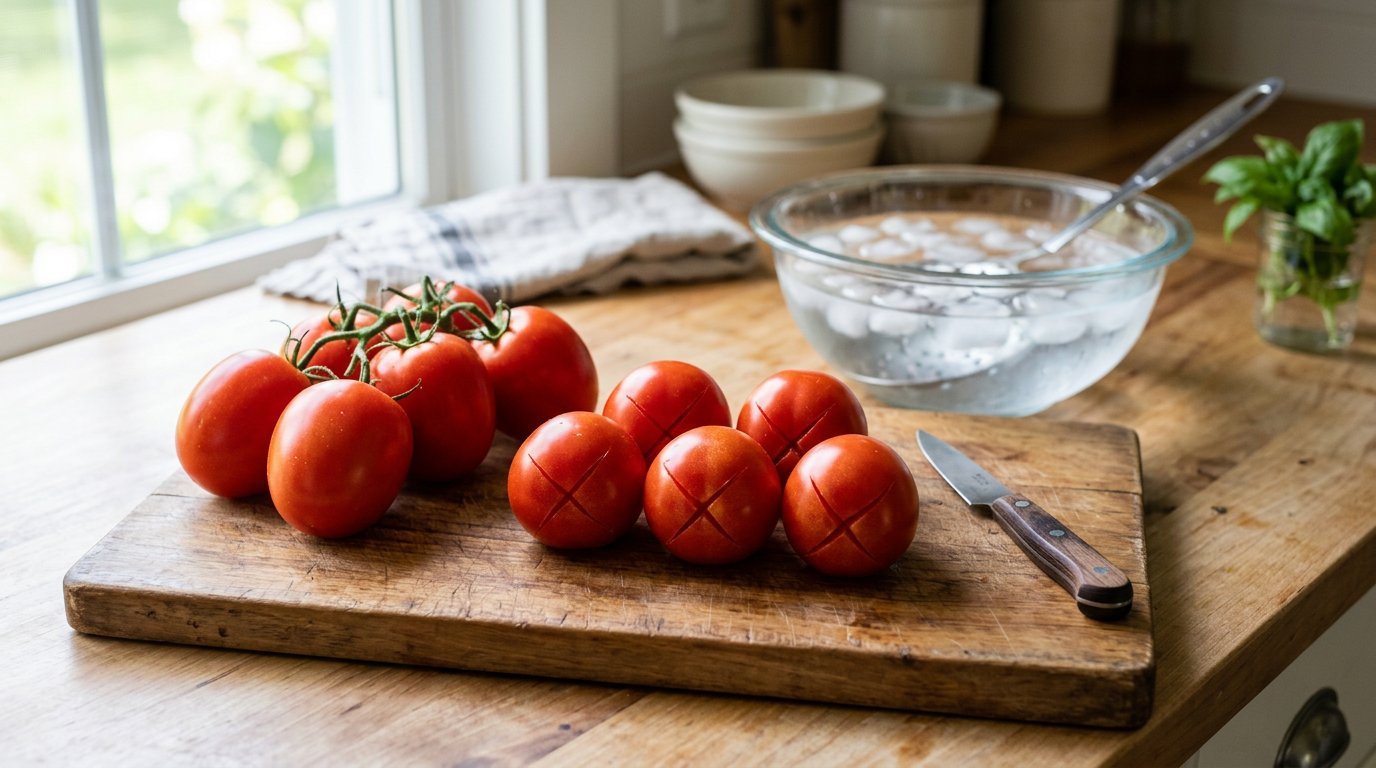
Peel and chop the tomatoes. Bring a large pot of water to a rolling boil. While it heats, use a paring knife to score a shallow X on the bottom of each tomato — just through the skin, not deep into the flesh. Fill a large bowl with ice water and set it next to the stove. Drop 3 to 4 tomatoes at a time into the boiling water. After 30 to 45 seconds, you will see the skin start to curl away at the X marks. Scoop them out with a slotted spoon and plunge them into the ice bath. After about 30 seconds in the ice water, the skins will slip off with a gentle tug. Roughly chop the peeled tomatoes into 1-inch chunks and set them aside in a bowl. Save every drop of juice — it is full of flavor you want in the pot.

Scoring an X on each tomato makes peeling after blanching quick and easy. -
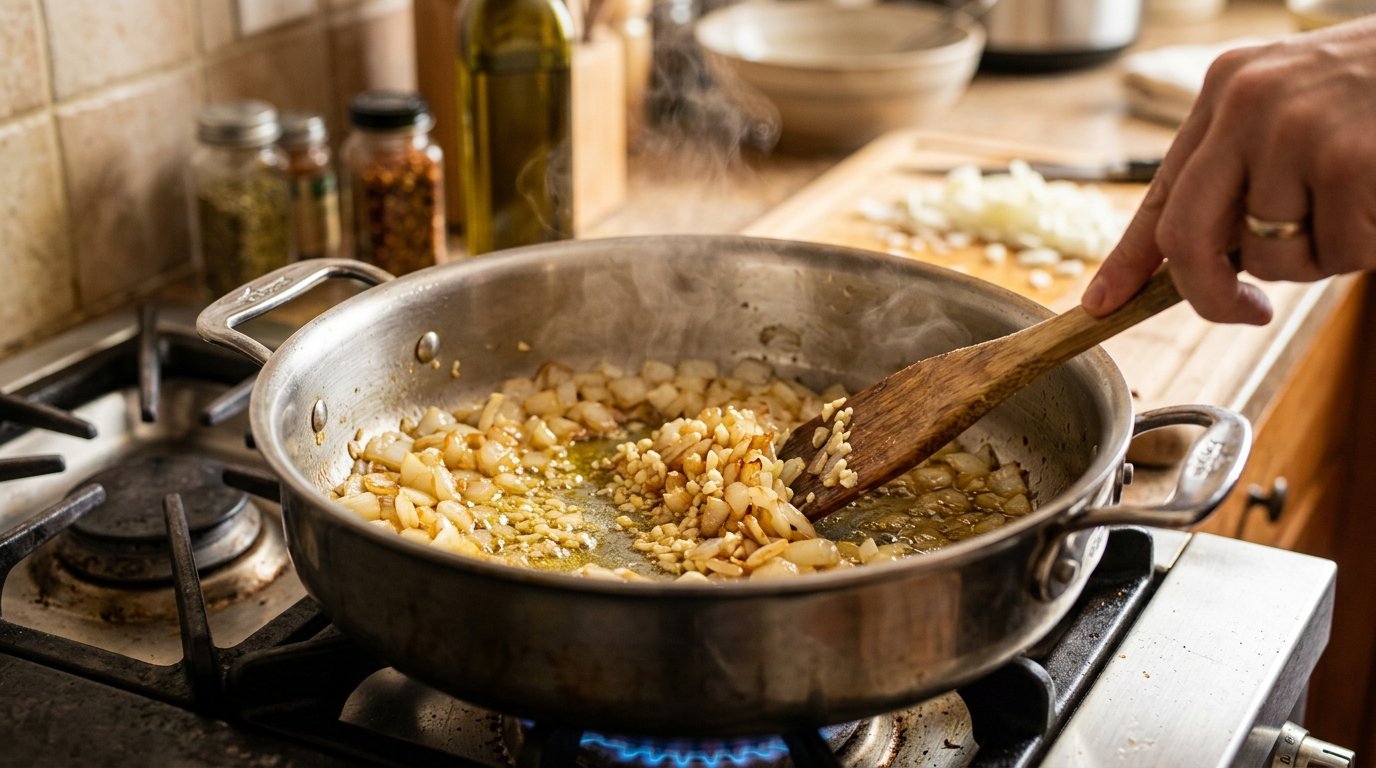
Saute the onion and garlic. Place your Dutch oven over medium heat and add the olive oil. Let it warm for about 30 seconds — you will see it shimmer and thin out. Add the chopped onion and stir to coat. Cook for 5 to 6 minutes, stirring every minute or so. You are looking for the onion to turn translucent with just a hint of gold at the edges. Now add the minced garlic and stir constantly for 60 seconds. The moment you smell that sweet, pungent garlic aroma filling the kitchen, move on to the next step. Do not let the garlic brown — burned garlic tastes bitter and sharp, and there is no fixing it.
Cook the onion until translucent and the garlic until fragrant — about 6 minutes total. -
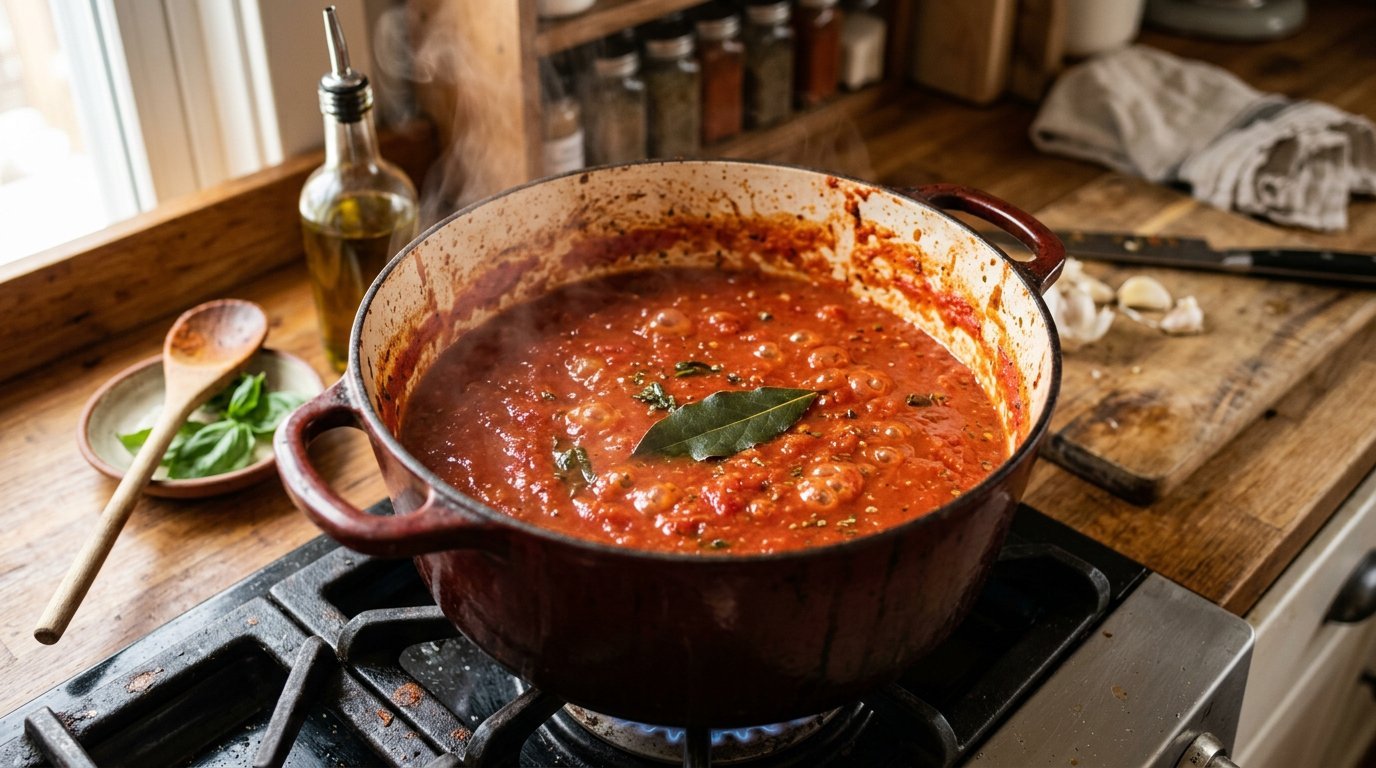
Add tomatoes and first simmer. Pour the chopped tomatoes and all their accumulated juices into the pot. Toss in the bay leaf. Stir everything together. Increase the heat to high and bring the pot to a full boil — you will see large bubbles breaking across the surface, not just around the edges. Once boiling, reduce the heat to medium-low so the sauce stays at a steady gentle simmer (small bubbles, not a rolling boil). Cook uncovered for 30 minutes, stirring every 8 to 10 minutes with a wooden spoon. Run the spoon along the bottom of the pot to prevent any sticking. You will see the tomatoes soften, collapse, and release their liquid. The sauce will look pale pinkish-red at first, then gradually deepen to a true red as it cooks.
After 30 minutes of simmering, the tomatoes break down and the sauce begins to thicken. A proper simmer for marinara means small bubbles rising steadily across the surface — not violent boiling and not barely steaming either. If the sauce is boiling hard, it will reduce too fast and the tomatoes can scorch on the bottom before they have time to develop flavor. If it is barely bubbling, you are not driving off enough water and the sauce will taste thin. Adjust your burner in small increments until you find that gentle, steady bubble.
- Season and second simmer. After the first 30 minutes, stir in the red wine, honey, basil, oregano, marjoram, salt, black pepper, fennel seed, and crushed red pepper. Give everything a good stir. The sauce will loosen up when the wine goes in — that is normal. Keep the pot uncovered and continue simmering at the same gentle bubble for another 30 minutes. Stir every 8 to 10 minutes. During this second simmer, the wine reduces and melds with the tomatoes, the dried herbs bloom and release their oils, and the sauce thickens noticeably. Watch the color shift from bright red to a deeper brick-red. The sauce is ready when you can drag a wooden spoon across the bottom of the pot and the sauce slowly fills the path back in.
-
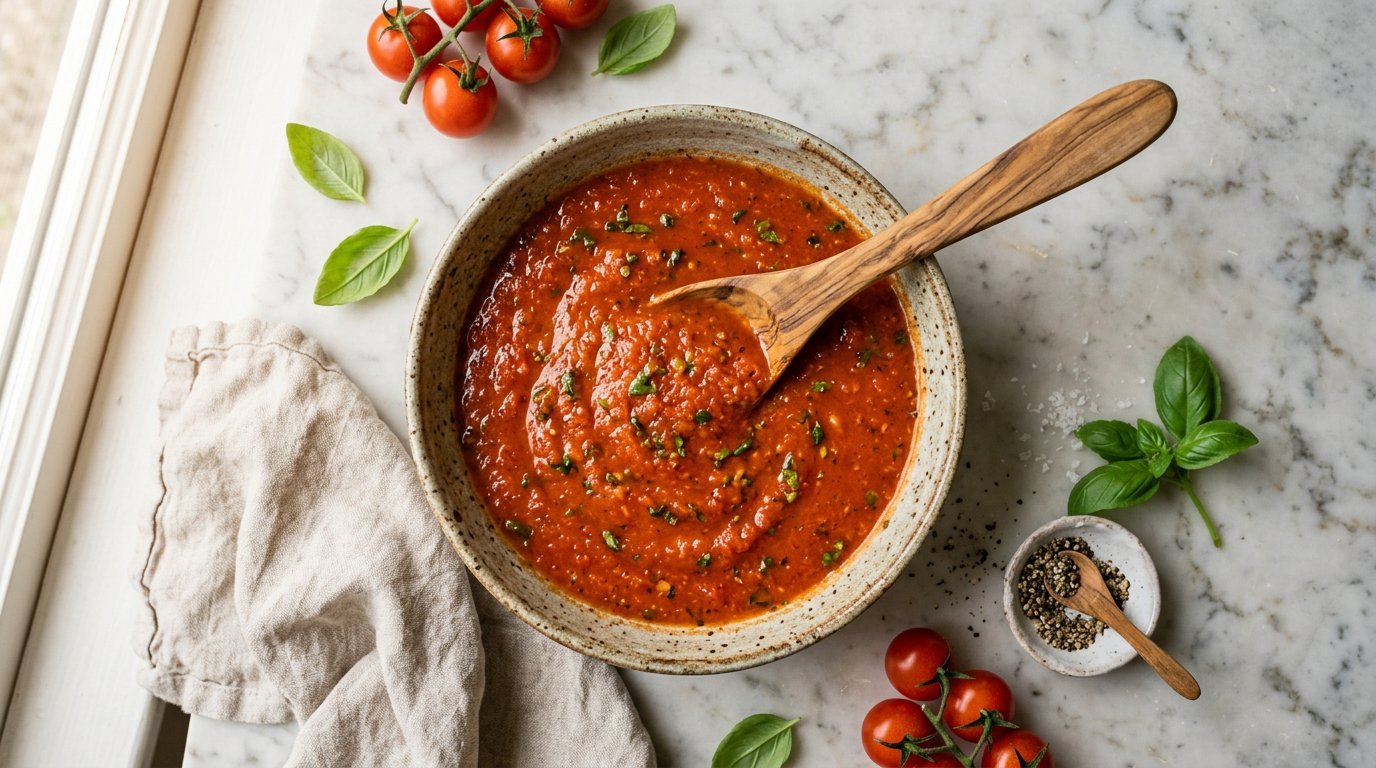
Finish and blend. Remove the pot from the heat. Fish out the bay leaf with a spoon and discard it. Stir in the balsamic vinegar — you will notice the aroma brighten immediately. Now is the moment to decide on texture. For a rustic, chunky marinara, leave the sauce as is. For a smoother sauce, grab an immersion blender and pulse a few times directly in the pot until you reach your preferred consistency. (I like about 4 to 5 short pulses — smooth enough to coat pasta evenly but with some small tomato pieces still visible.) Taste the sauce and add another pinch of salt or a splash more balsamic if it needs it. Serve immediately over pasta, or let it cool for storage.
If using a standing blender, let the sauce cool for 10 minutes first. Fill the blender no more than halfway, remove the center cap from the lid, and cover the hole loosely with a folded kitchen towel. Start on the lowest speed and increase gradually. Hot liquids expand when blended and can blow the lid off — the towel vent prevents this. Blend in two or three batches for the full pot.
Chef's Tips
Do not dump all the salt in at once. Add it with the herbs in Step 4, then taste and adjust at the very end. Tomatoes vary in natural saltiness depending on variety and ripeness. A teaspoon is a starting point, not a rule. Trust your tongue — if the sauce tastes flat, it needs more salt. If it tastes bright and the tomato flavor pops, you nailed it.
Surface area equals evaporation. A wide Dutch oven or saute pan reduces sauce faster and more evenly than a tall narrow stockpot. If your sauce seems thin after the full cook time, your pot was likely too narrow. Pour it into a wider pan and simmer for an extra 10 to 15 minutes.
Before adding the fennel seed to the pot, toss it into a dry small skillet over medium heat for 45 to 60 seconds, shaking the pan occasionally. When you smell a warm, slightly sweet licorice aroma, they are ready. Crush them lightly with the side of a knife and add to the sauce. Toasting amplifies their flavor dramatically.
To check if your marinara is thick enough, drag a wooden spoon through the center of the pot. If the sauce immediately rushes back to fill the gap, it needs more time. If the path stays visible for 2 to 3 seconds before the sauce slowly closes in, the consistency is right. This simple test is more reliable than any timer.
Recipe Variations
The recipe as written above. Balanced, herb-forward, and versatile enough for pasta, lasagna, pizza, or dipping. This is your everyday homemade marinara.
Increase the crushed red pepper to 1 full teaspoon and add 1 finely minced fresh red chili (serrano or Calabrian) with the garlic in Step 2. The heat builds gradually during the simmer, so taste after 20 minutes before deciding to add more. This version is excellent with penne and a shower of Pecorino Romano.
The classic recipe is already nearly vegan — simply swap the honey for an equal amount of maple syrup, agave nectar, or 2 tablespoons of finely grated carrot (added with the onion). The sauce is naturally dairy-free. Serve over your favorite pasta or use as a pizza base with vegan cheese.
Omit the crushed red pepper and reduce the garlic from 6 cloves to 3. Replace the red wine with an equal amount of vegetable broth. The resulting sauce is milder, slightly sweeter, and familiar-tasting — perfect for picky eaters. Blend until completely smooth for a texture kids tend to prefer.
This sauce is naturally low in carbohydrates (about 13g net carbs per serving). To make it even lower, omit the honey entirely — the tomatoes carry enough natural sweetness. Serve over spiralized zucchini noodles, spaghetti squash, or grilled chicken breasts instead of pasta.
Serving Suggestions
This marinara is built for versatility. Toss it with 1 pound of cooked spaghetti or bucatini for a classic weeknight dinner — reserve a mug of pasta water and add a splash to the sauce to help it cling to the noodles. Spoon it over eggplant lasagna as the red sauce layer. Use it as a pizza base for a homemade cheese pizza — just spread it a little thinner than you would for pasta since it will concentrate further in the oven.
For dipping, serve the sauce warm in a shallow bowl alongside crusty bread, mozzarella sticks, or arancini. It also makes an excellent poaching liquid for eggs (shakshuka-style) — make small wells in the simmering sauce, crack in 4 eggs, cover, and cook for 5 to 6 minutes until the whites are set.
Nutrition Facts
Nutrition values are estimates only. Actual values vary based on tomato variety, ripeness, and specific brands used.
Make-Ahead Tips
This sauce tastes even better the next day. The flavors continue to meld in the refrigerator overnight, and the texture sets up slightly thicker. Make the full batch, cool it completely, and refrigerate. Reheat gently on the stovetop over medium-low heat with a splash of water to loosen it if needed.
For meal prep, portion the cooled sauce into individual containers. Each 1/2-cup portion is perfect for a single serving of pasta. The sauce also freezes beautifully — see the storage section below.
Storage, Freezing, and Reheating
Refrigerator: Store cooled sauce in an airtight container for up to 5 days. Glass containers are ideal — the acid in tomatoes can stain plastic over time.
Freezer: Ladle cooled sauce into freezer-safe zip-top bags or containers. For bags, lay them flat on a baking sheet to freeze, then stack them upright once solid. This saves space and makes thawing faster. The sauce keeps well in the freezer for up to 6 months. Label each bag with the date and contents — frozen marinara and frozen chili look remarkably similar.
Reheating: From the fridge, warm the sauce in a saucepan over medium-low heat, stirring occasionally, for 5 to 7 minutes. From frozen, thaw overnight in the refrigerator, or place the frozen bag in a bowl of warm water for 20 to 30 minutes before reheating. If the sauce seems too thick after thawing, stir in a tablespoon or two of water or broth.
Common Mistakes to Avoid
- Skipping the peel. Tomato skins do not break down during simmering. They curl, separate from the flesh, and leave tough little ribbons floating through the sauce. Blanching and peeling takes 5 minutes and makes a real difference.
- Burning the garlic. Garlic goes from golden and fragrant to bitter and acrid in under 30 seconds. Add it after the onion is already soft, stir constantly, and move on to the tomatoes the moment the garlic smell fills the air.
- Cooking covered. A lid traps steam, which waters down the sauce and prevents it from thickening. Keep the pot uncovered for the entire 60-minute simmer.
- Rushing the simmer. A 20-minute sauce tastes like warm crushed tomatoes. A 60-minute sauce tastes like marinara. The extra time gives the tomatoes' pectin time to thicken the sauce naturally and lets the herbs fully infuse.
- Adding balsamic vinegar too early. Vinegar's brightness fades with heat. Stir it in off the heat at the very end so its sharp, sweet pop stays intact.
- Undersalting. Tomatoes need salt to taste like themselves. If your sauce tastes flat even after the full cook time, it almost certainly needs more salt. Add 1/4 teaspoon at a time and taste.
Troubleshooting
- Sauce is too thin? Simmer uncovered for an additional 10 to 20 minutes. If it is still thin, stir in 1 tablespoon of tomato paste and cook for 5 more minutes. Next time, use a wider pot or Roma tomatoes, which have less water.
- Sauce is too acidic? Stir in an extra teaspoon of honey or a small pinch of baking soda (1/8 teaspoon at a time). The baking soda neutralizes acid instantly — you will see tiny bubbles and the sharp edge will soften. Add only a little; too much leaves a soapy aftertaste.
- Sauce tastes bitter? This usually means the garlic burned. Unfortunately, there is no complete fix, but you can soften the bitterness by adding a little more honey and an extra splash of balsamic vinegar. Next time, keep a closer eye on the garlic and lower the heat.
- Sauce tastes flat? Add salt, a splash of balsamic vinegar, or a pinch of crushed red pepper. Flatness usually means the sauce needs one of three things: more salt, more acid, or a tiny bit of heat to wake up the palate.
- Tomato skins won't come off? The blanching water was not hot enough or the tomatoes did not stay in long enough. Return them to the boiling water for another 15 seconds. Also check that your ice bath is truly ice-cold — the thermal shock is what loosens the skins.
Wine Pairing
Since you already opened a bottle of red for the sauce, pour yourself a glass. A medium-bodied Italian red like Chianti Classico or Montepulciano d'Abruzzo mirrors the sauce's tomato brightness and herb notes. If you prefer white, a crisp Vermentino or Sauvignon Blanc cuts through the richness nicely. For a non-alcoholic option, sparkling water with a squeeze of lemon keeps the palate clean between bites.
A Quick Note on Marinara's Roots
Marinara sauce — alla marinara — originated in Naples in the 16th century, shortly after tomatoes arrived in Europe from the Americas. The name means "sailor-style," likely because it was a quick, non-perishable sauce made from tomatoes, garlic, and herbs that ship cooks could prepare at sea. There is no seafood in traditional marinara despite the nautical name. This version stays true to that Neapolitan spirit: simple ingredients, no shortcuts, and time as the secret weapon.
Frequently Asked Questions
No, but it is strongly recommended. Tomato skins turn tough and papery during simmering and float loose in the sauce, creating an unpleasant texture. Blanching makes peeling quick — score an X, boil 30 seconds, plunge into ice water, and the skins slip right off.
Roma (plum) tomatoes are ideal because they have thick flesh, fewer seeds, and low water content, which produces a thicker, richer sauce. San Marzano tomatoes — a specific type of plum tomato — are the gold standard. Beefsteak and heirloom varieties also work beautifully but may require longer simmering to reduce excess liquid.
Yes. Replace the 1/2 cup of red wine with an equal amount of beef broth, vegetable broth, or unsweetened grape juice. You can also simply omit it and add an extra splash of water or an additional teaspoon of balsamic vinegar at the end for depth. The sauce will still be delicious without wine.
Stored in an airtight container in the refrigerator, fresh tomato marinara sauce lasts 4 to 5 days. Let it cool completely before refrigerating. For longer storage, freeze in portion-sized containers or freezer bags for up to 6 months.
The easiest method is to simply simmer the sauce uncovered for an additional 10 to 20 minutes to evaporate more liquid. You can also stir in 1 to 2 tablespoons of tomato paste during the last 15 minutes of cooking. For a quick fix, mash some of the cooked tomatoes against the side of the pot with a wooden spoon to release their natural pectin.
Absolutely. The honey in this recipe balances the tomatoes' acidity, but you can omit it entirely — especially if your tomatoes are naturally sweet and ripe. Grated carrot (about 2 tablespoons, added with the onion) is a natural alternative that adds sweetness without refined sugar.
Related Recipes
📐 Kitchen Measurement Converter
📝 Your Notes
Culinary Reviewer: Ghazala Shakeel
Last updated: August 15, 2026