
Did you know that modern technology is revolutionising the way we grow crops? Researchers at EPFL recently demonstrated how advanced systems can design robotic grippers for harvesting tomatoes, showcasing the power of innovation in agriculture. This is just one example of how cutting-edge tools are transforming traditional farming practices.
Today, farmers are increasingly relying on data-driven processes to optimise crop yields. By integrating intelligent systems, they can streamline tasks and make informed decisions. These advancements not only save time but also reduce the amount of resources needed, making farming more sustainable.
The collaboration between technology and human creativity is opening new doors for agriculture. From robotics to drones, these innovations are reshaping the landscape of farming. In this article, you’ll discover how these tools are being used to enhance productivity and efficiency.
Key Takeaways
- Modern systems are transforming traditional farming practices.
- Data-driven processes help optimise crop yields.
- Advanced technology saves time and resources.
- Collaboration between innovation and human creativity is key.
- Robotics and drones are reshaping agriculture.
Current Landscape of AI and Robotics in Tomato Farming
Innovative technologies are transforming how crops are cultivated. The use of robotics and advanced systems is reshaping agriculture, making it more efficient and sustainable. From automated harvesters to precision monitoring, these tools are addressing the pressing needs of modern farming.
Innovative Research and Practical Applications
Recent research highlights the rapid evolution of robotics in agriculture. For instance, collaborative projects between institutions like EPFL and TU Delft are leveraging artificial intelligence to design robotic harvesters. These systems use computer vision to identify ripe crops, ensuring precise and efficient harvesting.
Practical applications extend beyond harvesting. Sensors and drones are now widely used for crop monitoring. They collect essential data on soil health, moisture levels, and nutrient content. This information helps farmers make informed decisions, optimising crop yields and reducing waste.
AI’s Role in Crop Monitoring and Quality Control
Artificial intelligence plays a pivotal role in real-time quality control. Advanced models can detect diseases and nutrient deficiencies early, preventing widespread crop damage. For example, predictive analytics tools analyse data from sensors to forecast potential issues, allowing farmers to take proactive measures.
Precision agriculture techniques are another key example of AI’s impact. By integrating data from multiple sources, these methods enable farmers to tailor their practices to specific crop needs. This approach not only improves efficiency but also minimises resource use, making farming more sustainable.
For more insights on how these technologies are applied, explore this detailed guide.
AI chatbot tomato farming: Enhancing Crop Yields and Efficiency
The integration of intelligent systems into agriculture is paving the way for unprecedented efficiency and productivity. These tools are revolutionising how farmers manage their operations, from planting to harvest. By leveraging data-driven insights, you can optimise resources and improve crop quality.

Streamlining Farming Processes with Intelligent Tools
Intelligent tools are transforming traditional farming methods. For example, automated systems can monitor soil moisture and nutrient levels in real time. This ensures that crops receive the exact amount of water and fertiliser they need, reducing waste and improving yields.
Another key benefit is the ability to detect diseases early. Advanced models analyse crop health and provide actionable recommendations. This proactive approach minimises losses and ensures healthier produce.
Data-Driven Decisions in Precision Agriculture
Precision agriculture relies on accurate data to make informed decisions. Sensors and drones collect information on soil quality, weather patterns, and crop growth. This data is then analysed to create tailored strategies for irrigation, pest control, and harvesting.
For instance, predictive analytics can determine the optimal time to harvest crops. This not only maximises yield but also reduces labour costs. By using these tools, you can achieve a more sustainable and profitable farming operation.
| Benefit | Impact |
|---|---|
| Reduced Water Usage | Up to 25% savings |
| Improved Yield Predictions | Increased accuracy by 30% |
| Early Disease Detection | Minimised crop losses |
| Cost Efficiency | Lower operational expenses |
These advancements are not just theoretical. For example, AI and computer vision in agriculture have already demonstrated significant improvements in crop monitoring and resource management. By adopting these technologies, you can stay ahead in the competitive farming industry.
Integration of AI with Robotic and Drone Technologies
The fusion of robotics and drones is reshaping modern agriculture. These technologies are merging to create smarter, more efficient farming solutions. By combining artificial intelligence with autonomous systems, you can achieve unprecedented levels of precision and control.
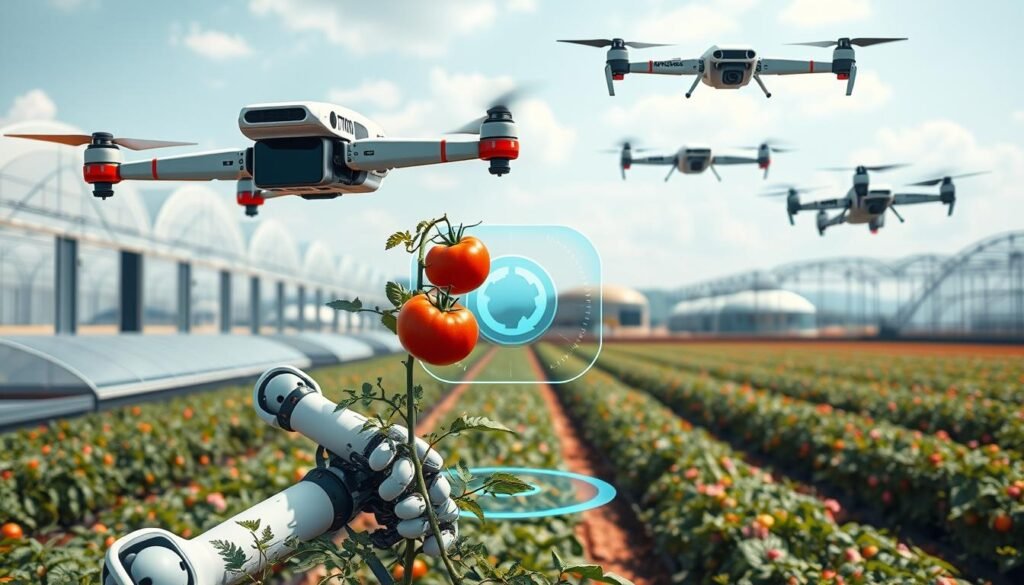
Collaborative design processes are at the heart of this transformation. Engineers and researchers work alongside intelligent systems to develop advanced machinery. For example, AI-powered harvesters and drone sprayers are now capable of performing tasks with minimal human intervention.
Collaborative Design and Engineering Innovations
One of the most exciting developments is the use of AI as a sounding board in the design process. Engineers input their ideas, and intelligent systems provide feedback, optimising the development of robotic tools. This collaboration ensures that the final product is both efficient and practical.
Take autonomous tractor systems as an example. These machines use sensors and real-time data to navigate fields and perform tasks. The result is a significant reduction in operational time and costs, making farming more sustainable.
Emerging Trends in Autonomous Farming Machinery
Emerging trends highlight the growing role of drones in agriculture. AI-powered drones can monitor crop health, spray pesticides, and even plant seeds. These innovations are not only improving efficiency but also reducing the environmental impact of farming.
Another trend is the use of advanced control systems in robotic harvesters. These machines can identify ripe crops and harvest them with precision. This level of accuracy ensures higher yields and better-quality produce.
“The integration of AI with robotics and drones is revolutionising agriculture, offering solutions to challenges like labour shortages and resource management.”
Looking ahead, the focus will be on balancing human expertise with intelligent systems. Ethical considerations, such as data privacy and job displacement, must also be addressed. By tackling these challenges, the agricultural sector can fully harness the potential of modern technology.
| Innovation | Benefit |
|---|---|
| Autonomous Tractors | Reduces labour costs and improves efficiency |
| Drone Sprayers | Minimises chemical use and environmental impact |
| Robotic Harvesters | Increases yield and crop quality |
| AI-Powered Sensors | Provides real-time data for better decision-making |
For more insights into how these technologies are transforming agriculture, explore this detailed guide on artificial intelligence in agriculture.
Conclusion
Modern robotics and advanced systems are transforming the way crops are cultivated. By integrating drones and autonomous machinery, you can enhance precision and efficiency in agriculture. These tools not only improve harvest quality but also reduce operational costs.
Data-driven decisions are at the core of this revolution. Sensors and models provide real-time insights, helping you optimise resource use. This approach ensures sustainable practices while meeting the growing need for food production.
Looking ahead, the impact of these technologies will continue to grow. Innovations in robotics and drone applications promise to further streamline farming processes. By adopting these solutions, you can stay ahead in a rapidly evolving agricultural landscape.
For more insights, explore how collaborative design is shaping the future of farming.
FAQ
How can artificial intelligence improve crop monitoring in agriculture?
Artificial intelligence enhances crop monitoring by using sensors and data analysis to track plant health, detect diseases early, and optimise irrigation. This helps farmers make informed decisions to improve yield and reduce waste.
What role do drones play in modern farming practices?
Drones are used for aerial surveys, mapping fields, and monitoring crop conditions. They provide real-time data, helping farmers identify issues like pest infestations or nutrient deficiencies quickly and efficiently.
How does robotics contribute to the harvesting process?
Robotics streamlines harvesting by automating tasks such as picking and sorting crops. This reduces labour costs, minimises damage to produce, and ensures a faster, more consistent harvest.
What are the benefits of using data-driven methods in precision agriculture?
Data-driven methods allow farmers to analyse soil conditions, weather patterns, and crop performance. This precision helps optimise resource use, reduce costs, and increase overall productivity.
How is technology addressing the challenges of food production?
Technology addresses food production challenges by improving efficiency, reducing waste, and enhancing crop quality. Innovations like autonomous machinery and intelligent systems ensure sustainable and scalable farming practices.
What are the emerging trends in autonomous farming machinery?
Emerging trends include self-driving tractors, robotic weeders, and AI-powered harvesters. These advancements aim to reduce human intervention, lower operational costs, and improve farming precision.
How can farmers integrate AI with existing farming tools?
Farmers can integrate AI by adopting smart sensors, using predictive analytics software, and incorporating robotic systems. These tools work alongside traditional methods to enhance decision-making and operational efficiency.
What impact does artificial intelligence have on resource management in agriculture?
Artificial intelligence optimises resource management by analysing water usage, fertiliser application, and energy consumption. This ensures sustainable practices and reduces environmental impact.
How do collaborative design innovations benefit the agricultural sector?
Collaborative design innovations bring together engineers, agronomists, and farmers to create tailored solutions. This approach ensures that tools and systems meet specific farming needs effectively.
What are the key considerations when implementing AI in farming?
Key considerations include cost, ease of use, and compatibility with existing systems. Farmers should also evaluate the technology’s ability to adapt to changing conditions and its long-term benefits.
Source Links
- MIT Technology Review
- Grok 3 AI: Elon Musk’s xAI unveils ‘scary smart’ Grok 3 AI chatbot; to rival ChatGPT and DeepSeek | – The Times of India
- Research Blog
- The Harnessing of Controlled Environment Agriculture Technologies for Phytochemical and Mineral Element Enrichment in Mesembryanthemum crystallinum
- Use of Lighting Technology in Controlled and Semi-Controlled Agriculture in Greenhouses and Protected Agriculture Systems—Part 1: Scientific and Bibliometric Analysis
- The Economic Impacts of AI-Enabled Precision Agriculture and boosting Productivity and…
- AI Transforming Agriculture: From Fields to Digital Revolution!
- AI-ML Applications in Agriculture and Food Processing
- Smart Sensors and Artificial Intelligence Driven Alert System for Optimizing Red Peppers Drying in Southern Italy
- Removal of toxic steroidal glycoalkaloids and bitterness in tomato is controlled by a complex epigenetic and genetic network
- Vegetable farming – Soil Preparation, Irrigation, Fertilization | Britannica