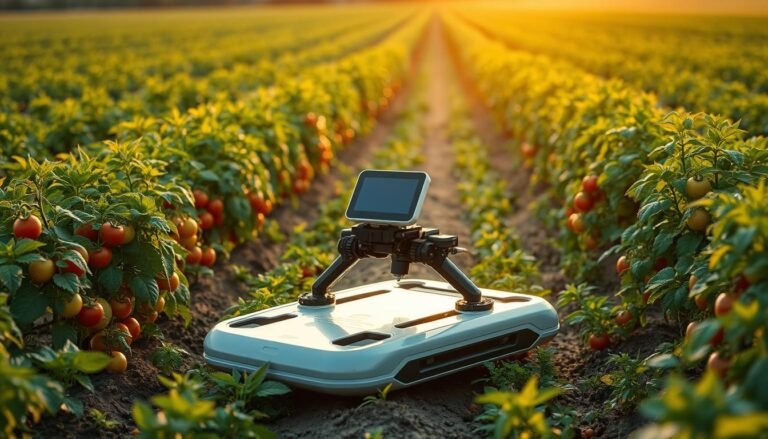
Did you know that weed infestations reduce crop yields by up to 20% in commercial tomato fields? In Badajoz, Spain, traditional herbicide treatments are struggling to keep up with this growing challenge. This has led to the adoption of cutting-edge techniques to ensure sustainable farming practices.
The SWEET project, led by CSIC, is at the forefront of this innovation. By using high-resolution imagery and deep-learning algorithms, it can precisely distinguish between tomato plants and invasive weeds. This allows for site-specific herbicide application, significantly reducing chemical usage.
This approach not only addresses herbicide resistance but also promotes environmental sustainability. If you’re looking to transform your farming practices, these advancements could be the key to boosting your crop yields while minimising ecological impact.
Key Takeaways
- Weed infestations significantly impact tomato crop yields, reducing them by up to 20%.
- Traditional herbicide treatments are often insufficient in combating these challenges.
- The SWEET project uses high-resolution imagery and deep learning to identify weeds accurately.
- Site-specific herbicide application reduces chemical usage, promoting sustainability.
- These technologies offer a practical solution for modern farming challenges.
Innovations in AI and Robotic Weeding Systems
Modern farming is witnessing a revolution in how weeds are managed, thanks to groundbreaking technological advancements. These innovations are not only improving efficiency but also promoting sustainability across the agricultural sector.
The SWEET Project and Deep Learning Advances
At the heart of this transformation is the SWEET project, led by CSIC. This initiative leverages convolutional neural networks to enhance image recognition, allowing for precise differentiation between crops and invasive plants. This technology ensures that herbicides are applied only where needed, significantly reducing chemical usage.
According to recent studies, machine vision systems can increase weeding efficiency by up to 80% compared to manual methods. This breakthrough is a game-changer for farmers looking to protect their crops while minimising environmental impact.
From Drones to Ground Sensors: New Technological Approaches
The transition from manual labour to robotic systems is reshaping weed management. Drones equipped with advanced imaging technology can scan fields and identify problem areas with remarkable accuracy. Ground-based sensors, on the other hand, provide real-time data on soil health and plant conditions.
One notable example is the LaserWeeder, a machine that uses lasers and AI cameras to eliminate weeds without harmful chemicals. This system not only reduces chemical inputs but also enhances crop protection, making it a valuable tool for modern farms.
“The integration of robotics and artificial intelligence is setting a new standard for precision agriculture.”
These advancements are not just theoretical; they are being tested and implemented in real-world scenarios. For instance, field demonstrations in Salinas have shown promising results, highlighting the practical benefits of these technologies.
| Technology | Benefit |
|---|---|
| Convolutional Neural Networks | Enhanced image recognition |
| Drones | Accurate field scanning |
| Ground Sensors | Real-time soil health data |
| LaserWeeder | Chemical-free weed elimination |
For more insights into how these systems are transforming agriculture, explore this detailed study on robotic weeding systems.
The Role of AI weed control tomatoes in Sustainable Farming
Sustainable farming practices are being revolutionised by advanced technologies that target specific agricultural challenges. These innovations are not only improving efficiency but also promoting environmental preservation. By integrating precision agriculture, farmers can achieve higher yields while minimising resource use.
Precision Agriculture and Targeted Herbicide Use
One of the most significant advancements is the ability to apply herbicides only where needed. This site-specific approach reduces chemical overuse and prevents herbicide resistance. Reinforcement learning plays a crucial role in this process, ensuring that treatments are applied with pinpoint accuracy.
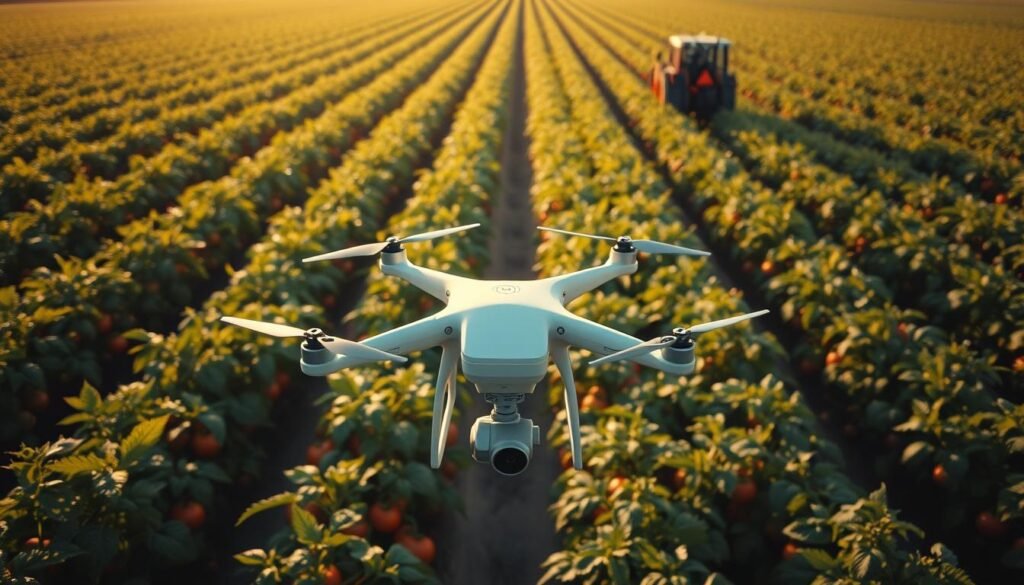
For example, the SWEET project by CSIC uses deep learning to identify and manage weeds effectively. This method not only enhances crop protection but also safeguards soil health, making it a cornerstone of sustainable farming.
Here are some key benefits of precision agriculture:
- Reduced herbicide application by up to 50%.
- Improved crop yields through targeted treatments.
- Enhanced soil health and reduced environmental impact.
These innovations are transforming the way farms operate, offering a balance between productivity and sustainability. By adopting these systems, you can reduce costs and improve the quality of your crops.
| Technology | Benefit |
|---|---|
| Reinforcement Learning | Pinpoint accuracy in herbicide application |
| Deep Learning | Effective weed identification |
| Precision Agriculture | Resource optimisation |
As research continues, these methods are expected to become even more efficient, further supporting sustainable farming practices. The future of agriculture lies in technologies that balance efficiency with environmental responsibility.
Economic and Environmental Impacts of Modern Weeding Systems
The shift towards modern weeding systems is reshaping agriculture, offering both economic and environmental advantages. These advancements are not only improving efficiency but also addressing long-standing challenges in farming practices.
Labour, Cost Efficiency, and Technological Disruption
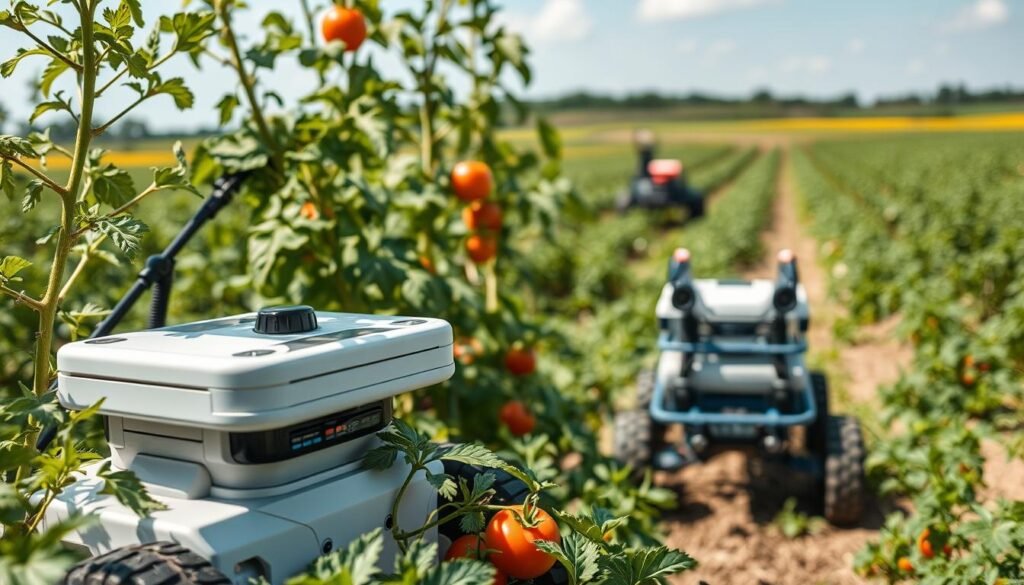
Robotic weeding machines are transforming labour dynamics in agriculture. By automating tasks traditionally done by hand, these systems reduce the need for manual labour. This shift can lead to significant cost savings for farmers, as fewer workers are required for weeding operations.
For example, machines like the LaserWeeder can eliminate thousands of weeds per minute. This efficiency reduces reliance on toxic chemicals, aligning with regulatory pushes to minimise harmful herbicide use. This transition is particularly relevant as state regulators and environmental groups advocate for sustainable practices.
However, this technological disruption also poses challenges. Traditional methods face economic pressure as intelligent systems increase operational efficiency. Farmers may need to invest in new equipment and retrain their workforce to adapt to these changes.
Environmental Benefits: Conserving Soil and Reducing Chemicals
Modern weeding systems offer significant environmental benefits. Precision weed management reduces chemical runoff, protecting nearby ecosystems. This approach also conserves soil health, ensuring long-term sustainability for farms.
Field demonstrations in Salinas have shown that these systems can improve soil quality while decreasing herbicide use. This dual benefit makes them a valuable tool for farmers aiming to balance productivity with environmental responsibility.
According to recent research, these technologies can reduce herbicide application by up to 50%. This reduction not only lowers costs but also minimises the ecological impact of farming. For more insights, explore this detailed study on intelligent weed control systems.
“The integration of robotics and precision agriculture is setting a new standard for sustainable farming.”
As these systems become more widespread, they are expected to drive further innovation in agriculture. By adopting these technologies, you can enhance your farm’s efficiency while contributing to environmental conservation.
Conclusion
Modern technology is transforming how we manage unwanted plants in farming. From laser-based systems in California to advanced techniques in Extremadura, these innovations are reshaping agriculture. They reduce the need for manual labour and harmful chemicals, offering a more sustainable approach.
Precision agriculture ensures that herbicide use is minimised, protecting soil health and nearby ecosystems. This targeted application not only lowers costs but also enhances crop yields. Research from the University of Florida highlights the long-term benefits of these systems.
By adopting intelligent farming practices, you can achieve both economic and environmental gains. The future of agriculture lies in balancing efficiency with sustainability. Explore more about these advancements in this detailed study on precision weed management.
FAQ
How does artificial intelligence improve weeding in tomato farming?
Artificial intelligence enhances weeding by using machine learning to identify and remove unwanted plants. This reduces the need for manual labour and minimises herbicide use, making the process more efficient and eco-friendly.
What is the SWEET project, and how does it help tomato crops?
The SWEET project focuses on developing deep learning technologies to detect and manage weeds in tomato fields. It uses advanced algorithms to ensure precise and effective crop management.
Can drones and ground sensors be used for weeding in tomato farms?
Yes, drones and ground sensors are increasingly used in modern farming. They collect data on soil and plant health, enabling targeted weeding strategies that protect tomato crops and improve yields.
How does precision agriculture reduce herbicide use?
Precision agriculture uses technology to apply herbicides only where needed. This targeted approach reduces chemical usage, conserves soil health, and supports sustainable farming practices.
What are the economic benefits of using robotic weeding systems?
Robotic systems lower labour costs and increase efficiency. They also reduce the need for manual weeding, allowing farmers to focus on other aspects of crop management.
How do modern weeding systems benefit the environment?
These systems minimise chemical runoff and soil disturbance. By conserving soil quality and reducing herbicide use, they contribute to a healthier ecosystem and sustainable farming.
Are there any ongoing research projects in this field?
Yes, institutions like the University of Florida are actively researching AI applications in agriculture. Their work focuses on improving crop management and developing innovative weeding technologies.
Source Links
- Classification of Tomato Harvest Timing Using an AI Camera and Analysis Based on Experimental Results
- Frontiers | CTDA: An accurate and efficient cherry tomato detection algorithm in complex environments
- Internet of Things (IoT) and Artificial Intelligence (AI) in Agriculture: Applications for Sustainable Crop Protection
- Technological Advances in Smart and Sustainable Agriculture: The Role of Internet of Things, Artificial Intelligence, Big Data Analysis, Machine Learning & Deep Learning
- Frontiers | Leveraging deep learning for plant disease and pest detection: a comprehensive review and future directions
- AI-ML Applications in Agriculture and Food Processing
- AI
- Technological Innovations in Urban and Peri-Urban Agriculture: Pathways to Sustainable Food Systems in Metropolises
- Genome editing, an opportunity to revive soybean cultivation in Europe
- Use of Uncrewed Aerial System (UAS)-Based Crop Features to Perform Growth Analysis of Energy Cane Genotypes
- Enhanced recognition and counting of high-coverage Amorphophallus konjac by integrating UAV RGB imagery and deep learning – Scientific Reports