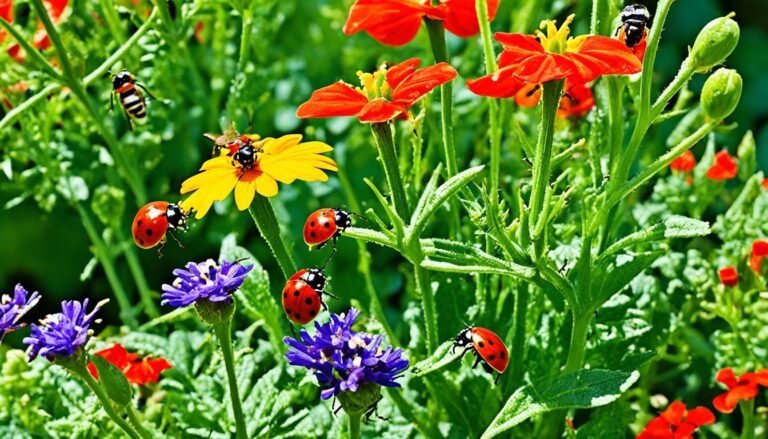
Do you want a garden that thrives and is good for the earth? You can create this by wisely picking the plants you grow. This is called companion planting. It’s about choosing plants that help each other grow and bring in good bugs. What are these helpful insects, and how can they make your tomato garden better? Let’s find out.
Key Takeaways
- Companion planting can help reduce pest populations, improve soil health, and increase crop yields for tomatoes.
- Certain plants like marigolds, borage, and nasturtiums attract beneficial insects like ladybugs, lacewings, and parasitic wasps that naturally control pests.
- Companion plants can also improve pollination and enhance the overall health and flavor of your tomato crop.
- Choosing the right combination of companion plants can create a diverse, resilient ecosystem that supports your tomato plants throughout the growing season.
- Avoiding problematic plants like corn, potatoes, and fennel can help prevent competition and disease transmission in your tomato garden.
Introduction
Tomato gardening is fun but hard work. If you want your garden to thrive, use beneficial insects. They are key to keeping your tomato plants healthy and productive.
Importance of Beneficial Insects in Gardening
Beneficial insects are a gardener’s best friend. They control pests, help with pollination, and make the soil better. With them, you use fewer pesticides and have a more organic, sustainable garden.
Overview of Companion Planting
Companion planting is a smart way to garden. It’s about putting certain plants near each other to help both grow better. When done right, it attracts beneficial insects and creates a healthy, balanced garden.
“Companion planting is a holistic approach that involves strategically placing certain plants near each other to create a mutually beneficial relationship.”
Benefits of Attracting Beneficial Insects
Getting beneficial insects into your tomato garden has many upsides. Things like better pest control and more pollination help your garden thrive. This is great for those who want to grow tomatoes in an organic way.
Natural Pest Control
Ladybugs, lacewings, and praying mantises eat a lot of pests. A single ladybug eats loads of aphids daily. Lacewing larvae also help by eating caterpillars and whiteflies. Inviting these helpers means you’ll need less pesticide, making your garden more organic.
Improved Pollination
Bees and butterflies help tomatoes grow by pollinating them. They are key in making tomatoes and many other fruits and veggies too. Attracting them to your garden means you’ll get more tomatoes.
Enhanced Soil Health
Some plants make the soil healthier by adding nutrients or keeping away pests. This helps your tomato plants grow stronger and produce more. It’s all about helping your garden work better.
“Cultivate the mortal enemies of insects to aid in pest control.”
– Eleanor Perenyi
Using good bugs makes your garden a better place. It helps with bad pests, pollination, and soil without needing harsh chemicals. This approach is both good for you and the planet.
Top Companion Plants to Attract Beneficial Insects
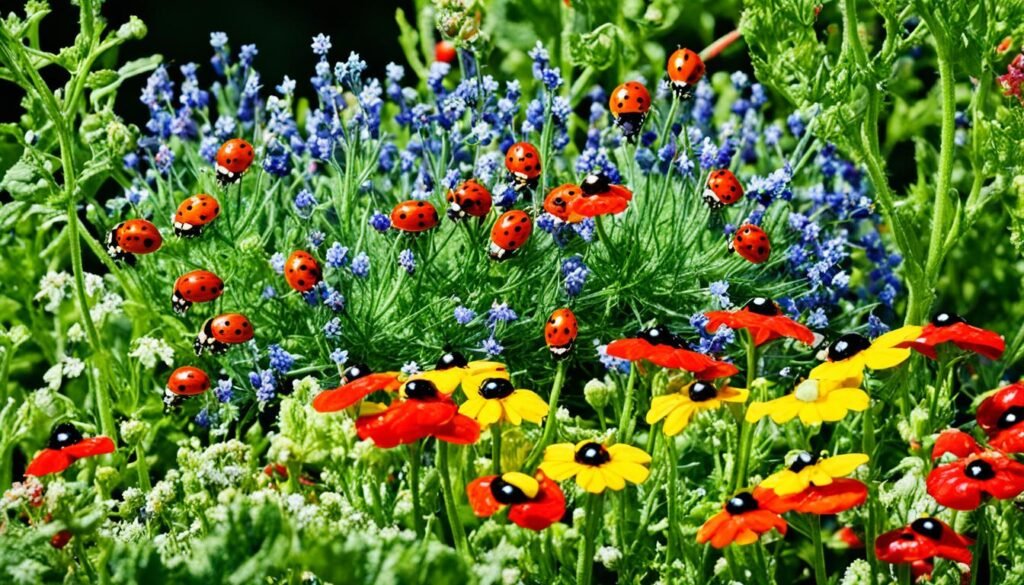
Companion planting is a way to grow different plants together for mutual benefits. In tomato gardens, some plants can bring in helpful bugs. These bugs are key for controlling pests, pollinating, and keeping soil healthy. This is vital for a successful tomato harvest.
Marigolds
Marigolds are great next to tomatoes because they keep many pests away. The strong smell of marigolds can stop tiny worms called nematodes from attacking tomato roots. They also bring in ladybugs and lacewings. These insects eat harmful pests, like aphids and spider mites.
Borage
Borage is a top choice for tomato gardens. Its blue flowers attract important pollinators, such as bees and butterflies. These can boost tomato growth. Borage also scares off tomato hornworms, a pesky tomato plant enemy.
Dill
Dill is good for more than seasoning your food; it’s also a friend to tomatoes. It draws in parasitic wasps that help control aphids, a common pest. So, having dill around can keep aphids in check.
Nasturtiums
Nasturtiums work hard in the tomato garden. They serve as a trap for pests, diverting them from tomatoes. What’s more, they have a scent that some insects avoid. This makes nasturtiums doubly beneficial for your tomato plants.
Sweet Alyssum
Sweet alyssum is a small, flowering plant that lures useful bugs like pirate bugs. These bugs eat pests that can harm tomatoes, giving your garden a natural pest control team.
Adding these companion plants to your tomato garden can help create a better ecosystem. This makes your tomatoes healthier. These plants not only attract helpful bugs but also improve soil and boost your overall garden’s success.
Seedtospoon.net, Finchandfolly.com, and Tomatoville.com offer more tips and info on companion planting with tomatoes.
Planting and Maintenance Tips
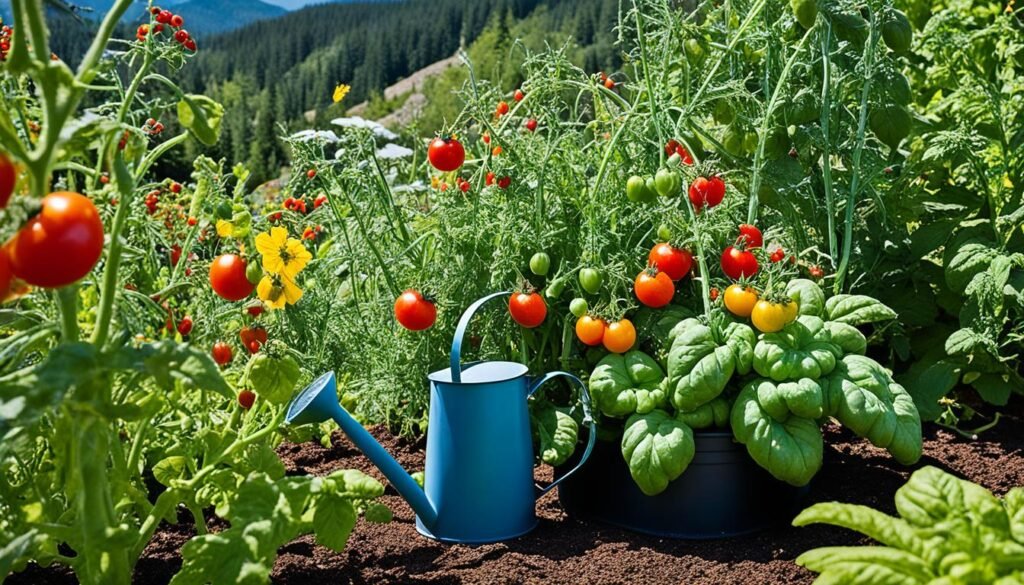
To have a great tomato garden, think about the best ways to plant, water, and care for your plants. Make sure they get plenty of sunlight and have room to grow. This helps create a healthy garden for your tomatoes and the insects that help them.
Optimal Planting Conditions
Choose a sunny spot that gets 6 hours of sunlight daily for your tomatoes. Raised garden beds are good because they warm up early and drain well. Remember to space your plants apart so they can grow without getting too crowded.
Watering and Fertilizing Practices
- Give your plants a deep watering, but not too often, about 1-2 inches per week. Change how much you water based on the weather and your plants’ growth.
- Use an organic fertilizer every 4-6 weeks during the growing season for nutrients.
- At planting, a starter solution can help your tomatoes get a good start.
Monitoring and Managing Plant Health
Keep an eye on your garden regularly to make sure everything stays healthy. Look out for pests like aphids, armyworms, cutworms, and tomato hornworms. If you see any problems, deal with them right away. Also, watch for any signs of disease and stop it from spreading.
“Taking good care of your tomato garden will bring a big harvest and help create a balanced environment. This supports good bugs and keeps your plants healthy.”
Use these tips to make a flourishing, eco-friendly tomato garden. This will draw the right insects and help your plants grow well.
Conclusion
In conclusion, having good friends next to your tomato plants brings many good things. This includes keeping bad bugs away and making sure each flower gets its pollen. The soil also gets healthier with friends like marigolds, borage, dill, nasturtiums, and sweet alyssum. These plant friends mean less need for bad bug chemicals.
Summary of Key Points
This article looked at why it’s good to have helpful bugs in your tomato area. We learned about how they can take care of bad bugs, make sure flowers get their pollen, and make the soil better. We also looked at which plants are best for this, like marigolds, borage, dill, nasturtiums, and sweet alyssum. We talked about how to add them to your tomato garden.
Encouragement to Use Companion Planting for Better Tomato Gardens
With the right care, you can get a lot of yummy tomatoes in a way that’s good for the earth. Using friends plants can make a healthy place for tomatoes to grow. This means you don’t need to use as many bad bug chemicals. Your garden will be better and it will feel good to take care of it this way. Check this link for more info on how this helps your garden last longer. This is a good way to grow tomatoes and feel happy about it.
FAQ
What are the benefits of attracting beneficial insects to a tomato garden?
Attracting beneficial insects to a tomato garden is great for a few reasons. First, they naturally control pests, so you won’t need as many pesticides. Second, they make sure the tomato flowers turn into fruits more often. Also, some plants help the soil stay healthy and keep away bad bugs.
What are some of the best companion plants to attract beneficial insects to a tomato garden?
Some great plants for this are marigolds, borage, dill, nasturtiums, and sweet alyssum. They bring friendly bugs like ladybugs and lacewings. These helpers eat the pests and make more tomatoes grow.
How do I properly plant and maintain companion plants in a tomato garden?
For good companion planting, make sure each plant has enough space and light. They should also get the right amount of water. Use natural fertilizers and watch out for bugs. This keeps your garden healthy and in balance.
How do companion plants help improve the soil health in a tomato garden?
Some plants make the soil better, like borage and nasturtiums. They stop bad bugs from hurting your plants. Others, like dill, bring good bugs that make the soil healthier. Also, some plants add more nutrients to the soil.
Can companion planting really reduce the need for pesticides in a tomato garden?
Yes, planting friends with your tomatoes can cut down on pesticides. The good bugs keep the bad bugs under control. And, some plants can keep pests away by themselves. So, your tomatoes stay safer without so many chemicals.
Source Links
- What to Plant with Tomatoes: The Ultimate Guide to Companion Planting | EZ-FLO™ Injection Systems
- The Best Companion Plants for Tomatoes — Meadowlark Journal
- 10 Best Companion Plants to Plant with Tomatoes
- Attract Good Bugs to Fight Tomato Pests – FineGardening
- Common Tomato Insect Pests | Identification & Control Tips
- Tomato Insect Pests in the Home Garden
- 7 Ways to Attract Beneficial Bugs to Your Yard—and Why You Should
- Improving tomato plants through companion planting – AgriLife Today
- Beneficial Insects in the Garden
- Tomatoes: 5 Companion Plants to Repel Pests & Grow More Tomatoes!
- Finch + Folly — Companion Planting what Plants Grow Best Together
- Plants That Attract Beneficial Insects – Page 2
- All About Planting Tomatoes- Tomato Care Tips
- 7 Tomato Pests and How to Get Rid of Them
- Top Tips for Terrific Tomatoes – Urban Programs Travis County
- Effective Ways to Keep Cats from Pooping in Your Garden
- Extension | Beneficial Insects Commonly Encountered by Gardeners
- Beneficial Insects Deliver Plant Growth-Promoting Bacterial Endophytes between Tomato Plants