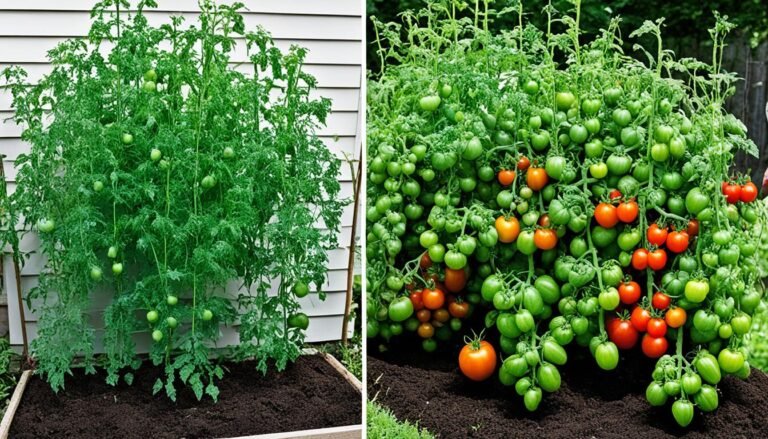
While looking for the perfect tomato, you’ve seen the words “determinate” and “indeterminate.” They talk about how a tomato plant grows. This can really change how you care for your tomatoes. But, which kind should you pick for your garden? We’ll look at these tomato types to help you make the best choice.
Key Takeaways
- Determinate tomatoes are smaller and grow to about 4-5 feet. They make all their fruit in just 1-2 months.
- Indeterminate tomatoes get taller, from 6-12 feet. They keep making fruit all season long.
- If you’re short on space, determinate tomatoes are a great pick. They’re also good for canning and making sauces. On the other hand, indeterminate types give you tomatoes for a longer time.
- Indeterminate tomatoes come in more flavors, colors, and sizes. This includes special heirloom varieties.
- When choosing the right tomato, think about your garden space, the weather, and what you’ll use the tomatoes for.
Introduction to Tomato Plant Types
Tomato plants come in two main types: determinate and indeterminate. It’s key to know the difference for a good garden. The type of tomato plant affects the harvest time and how big the plant gets. Choosing the right one matters for a big tomato crop.
Importance of Choosing the Right Type
There are different tomato plant types, each with special traits. Choosing between determinate and indeterminate is important. Determinate tomatoes grow to a set size and give all their fruit quickly. Indeterminate tomatoes keep growing and fruiting all season. Pick the best type for your space and needs. This makes growing tomatoes fun and successful.
Overview of Determinate and Indeterminate Tomatoes
Determinate tomatoes are like bushes. They grow up to about 4 feet high. They give a lot of fruit all at once, great for small gardens or quick harvests. Indeterminate tomatoes keep growing and making fruit all season. They can get taller than 6 feet, offering fruit for months. Gardeners with long summers like these for a steady tomato supply.
Knowing the differences between determinate and indeterminate tomatoes is the start. Check out more about determinate tomatoes and indeterminate tomatoes. You’ll learn about their growth in the next sections.
Understanding Determinate Tomatoes
When growing tomatoes, it’s key to know the difference between determinate and indeterminate types. Determinate tomatoes, also called “bush” tomatoes, are structured differently from indeterminate varieties.
Characteristics of Determinate Tomatoes
Determinate tomato plants stay small, usually 3-4 feet high. This is unlike indeterminate tomatoes, which can reach over 10 feet. Determinate types stop growing in height and soon after focus on producing fruit.
Growth Pattern and Size
Because of their size and how they grow fruit, determinate tomatoes work well in small gardens or pots. They reach a certain height, then fruit all at once. This is different from continuously producing more fruit and growth.
Best Growing Conditions for Determinate Tomatoes
Full sun and well-drained soil are good for determinate tomatoes. They need support like a cage or trellis. This keeps their compact plants up and their fruit clean.
Pros and Cons of Determinate Tomatoes
Growing determinate tomatoes is great for storing. They make a lot of fruit all at once. This makes it easy to get a lot of tomatoes ready for canning. They also need less watching than indeterminate types. But, they give fruit for only a short time, not all season.
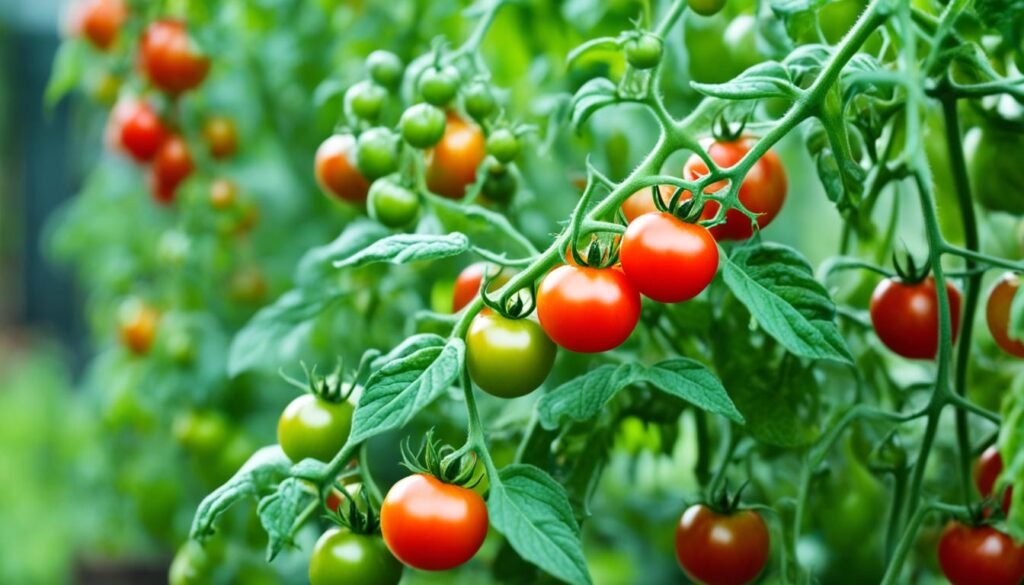
“Determinate tomatoes are a great choice for preserving harvests due to their concentrated fruit production within a few weeks.”
Deciding on determinate tomatoes means picking a neat and easy option that suits small areas and saving food. Knowing their features helps pick the right tomatoes for your garden.
Understanding Indeterminate Tomatoes
Determinate tomato plants follow a clear path in growth. However, indeterminate tomatoes have a different style. They keep growing and fruiting all season long. These tomatoes can grow very tall, up to 12 feet. But most are around 6 feet tall. They need strong supports or a good trellis to stay up and healthy.
Indeterminate tomatoes love full sun and quality soil, just like the others. They keep producing fruit for a long time, not all at once. Because they keep growing, you have to prune them often to keep the fruit and plant healthy.
Characteristics of Indeterminate Tomatoes
- Continuously grow and produce tomatoes throughout the growing season
- Can reach heights of up to 12 feet, with 6 feet being a more typical size
- Require extra-tall supports or a sturdy trellis system for proper growth and support
- Thrive in full sun and well-drained, nutrient-rich soil
- Provide a steady, continuous supply of fresh tomatoes over an extended period
- Require more frequent pruning to maintain optimal fruit size and plant health
Growth Pattern and Size
Indeterminate tomatoes grow like vines and can get very tall. They can reach up to 12, but usually, they are around 6 feet. Their strong and wide growth makes it necessary to support them well.
Best Growing Conditions for Indeterminate Tomatoes
These tomatoes need a lot of sun and good soil to grow well. Because they keep growing, you must be careful with pruning and supporting them to keep the plants healthy.
Pros and Cons of Indeterminate Tomatoes
Growing indeterminate tomatoes offers a longer time to harvest fresh fruit. But, they also need more care, like frequent pruning and strong supports, due to their fast and big growth.
“The long, indeterminate vines of these tomato varieties allow for a continuous harvest, ensuring a steady supply of fresh, delicious tomatoes throughout the growing season.”
Comparing Determinate and Indeterminate Tomatoes
When planting tomatoes, it’s important to know about determinate and indeterminate types. Each kind affects how your garden grows and the tomatoes you get. Knowing the differences helps you pick the best tomato plant for your space and needs.
Yield and Harvest Time
Determinate tomatoes grow to about three to four feet tall. They give all their fruits at once over a few weeks. This is great if you want to can them. Indeterminate tomatoes, though, can grow above ten feet tall. They bear fruits all season long. So, while determinate tomatoes may give 10 pounds of fruit per plant suddenly, indeterminate ones can give more than 30 feet worth of fruit by fall.
Space Requirements
Determinate tomatoes don’t get taller than four feet. They’re perfect for small areas or pots. Indeterminate tomatoes, on the other hand, need space. They can climb over ten feet tall. They do well with supports like tall cages or trellises.
Maintenance and Pruning
Determinate tomatoes are bushy and usually don’t need extra support. Indeterminate tomatoes, however, benefit from being pruned and trellised. This keeps their growth under control. It’s also good to remove suckers from indeterminate and some semi-determinate tomatoes.
Suitable Uses and Applications
Both types give various tomato kinds like slicers and cherries. For example, determinate types include ‘Italian Roma’ and ‘Mountain Merit’. Indeterminate types, like ‘Green Zebra,’ ‘Sun Gold,’ and ‘Cherokee Purple,’ are not for canning. They fruit all season, while determinate ones fruit at once, making them better for canning.
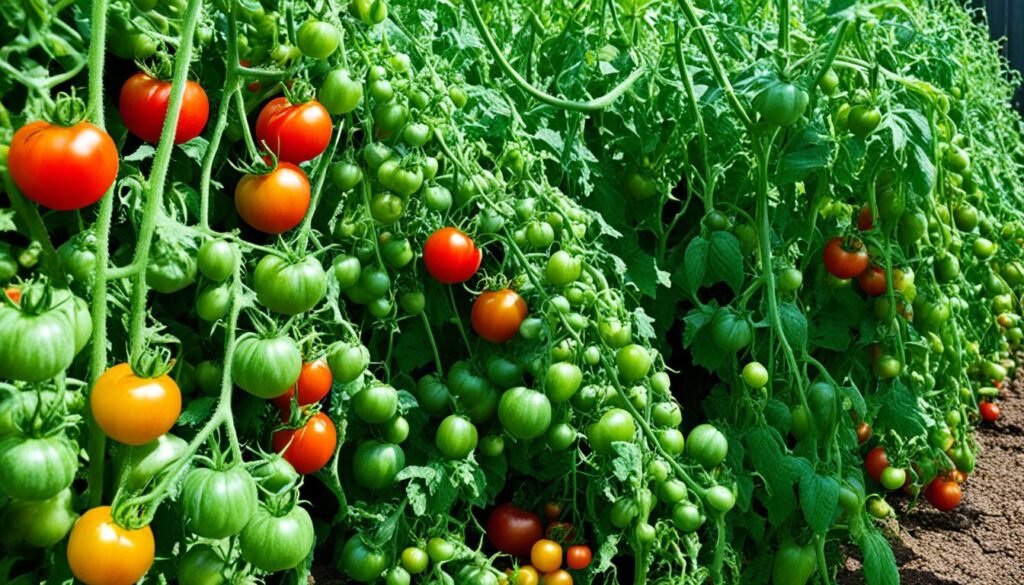
“Understanding the differences between determinate and indeterminate tomatoes is essential for gardeners to make the right choices for their growing conditions and preferences.”
Choosing between determinate and indeterminate tomatoes is about what you want in your garden. Think about your space and what you like. This can lead to a tomato harvest that’s just right for you.
Choosing the Right Tomato Type for Your Garden
Choosing between determinate and indeterminate tomato types matters a lot. Think about your garden space, what you want to achieve, and your local weather. These things help pick the best tomatoes for you. This way, your harvest will be plenty and successful.
Assessing Your Garden Space
For small spaces, go with determinate tomatoes. They’re small and have all their fruit at once. Determinate tomatoes usually grow to a height of 3 to 5 feet and are low. This makes them perfect for pots, small beds, or patios. If you have a big garden, indeterminate tomatoes are a great choice. They can grow very tall and need support. Stakes or cages can help them grow strong and healthy.
Considering Your Gardening Goals
If you want to can tomatoes, pick determinate types. They are perfect for making sauces, soups, or canned goods. But if you love having fresh tomatoes all season, go with indeterminate. These will keep giving fruit until the weather turns cold.
Climate and Growing Season Considerations
If your area has a short growing season, determinate tomatoes work well. They bear fruit over about a month. Indeterminate tomatoes, though, keep going until it’s frosty out. Knowing how long your growing season is helps. Choose the tomatoes that fit your area best.
Considering your garden space, goals, and local weather is key. With this in mind, you can choose the best tomatoes for a great harvest.
Popular Varieties of Determinate and Indeterminate Tomatoes
Gardeners have many tomato types to pick from. These include determinate and indeterminate kinds, each with its own unique qualities. Determinate tomatoes grow for a set time and give one big harvest. They usually reach 4-5 feet tall.
On the flip side, indeterminate tomatoes keep growing all season long. Their height can vary from 6 to 10 feet or even more. You can find many sizes, shapes, and tastes in indeterminate varieties, making them a favorite choice for most gardeners.
Popular Determinate Varieties
Ace, Roma, Manitoba, and Heinz are some determinate types, each known for its own features. These tomatoes usually grow to about 3-4 feet high. They give all their fruit in a 2-3 week period, perfect for canning and preparing.
For example, Mountain Princess bears fruits that are four to six ounces. On the other hand, Rutgers VF thrives in hot areas, delivering crack-resistant, bright red fruits. San Marzano is another option, great for sauce-making, with its bright red plum fruits.
Popular Indeterminate Varieties
Black Cherry, Campari, Purple Russian, and Pineapple are among the indeterminate tomatoes. They vary in height and the time it takes to produce fruit.
Indeterminate types can easily grow from six to ten feet. They keep producing fruits all season long. For instance, Mr. Stripey has colorful, meaty tomatoes. In contrast, Big Momma has big tomatoes with a nice mix of sweet and sour.
Indeterminate Amish Paste is good for sauces and Speckled Roman has thick flesh with a beautiful mix of yellow and orange.
If you like a big harvest at once or a season full of fruits, there’s a tomato for you. Knowing about determinate and indeterminate tomatoes helps you choose what’s best for your garden. This way, you can grow a lot and enjoy the versatility of this plant.
Tips for Growing and Caring for Both Types
Whether you pick determinate or indeterminate tomatoes, good planting and care are key for a big crop. Most tomatoes are either determinate or indeterminate, depending on their growth and size. Determinate tomatoes are shorter and give fruit all at once. Indeterminate types are taller and fruit through the season, needing support.
Determinate types grow to around one to three feet, and indeterminate can grow over five feet, based on the season’s length.
Planting and Soil Preparation
First, work on the soil. Make sure it drains well and has lots of organic matter for your plants. Determinate tomatoes grow three to five feet tall. Indeterminate ones can be six to twelve feet tall.
Pick a sunny spot. Tomatoes love at least six hours of sunlight every day.
Watering and Fertilizing
Water regularly to keep the soil moist but not soaked. Use a good fertilizer for strong plants and better harvests. Seed packs tell you how many days to maturity. Cherry tomatoes need about 55-60 days, early ones need 60, and big slicers around 80 days.
Pest and Disease Management
Watch out for pests like aphids, hornworms, and spider mites, and diseases including early blight. It’s important to stop these from hurting your plants.
Harvesting and Storage
Indeterminate types often yield more per plant than determinate ones. When it’s time to pick, know that determinate and indeterminate types ripen differently. Be gentle with the fruit for the best storage.
Determinate types are ready in about a month. Indeterminate tomatoes keep on growing and adding more fruit.
If you follow these tips, you’ll have a great harvest from both types. Use two-thirds of your crop for making paste, and keep a third for eating fresh. For seeds, check out sites like Tomatofest and SeedsNow for heirloom varieties.
https://www.youtube.com/watch?v=4dnGBJE6wmI
“Gardening is a way of showing that you believe in tomorrow.” – Audrey Hepburn
Conclusion
We learned about two tomato types, determinate and indeterminate. Both have special uses in garden. Determinate tomatoes give a quick harvest in only a few weeks. They’re smaller, about 4-5 feet, but give lots of tomatoes at once. Indeterminate tomatoes keep growing and can get very tall, 8-10 feet. They give tomatoes all season, from early summer to frost.
Final Recommendations for Gardeners
To choose the best tomato for you, think about your space, goals, and weather. Small places fit determinate tomatoes well, especially if you want to preserve them. Indeterminate ones need more room and support like stakes or cages. Your pick depends on what you like and need for your garden. Know the facts about tomato types to decide right and have a good tomato crop.
If you like quick harvests, determinate tomatoes are great. If you prefer a steady supply, go for indeterminate. Growing tomatoes is fun and rewarding. Think about what you want and pick the best tomatoes for your garden.
FAQ
What is the difference between determinate and indeterminate tomato plants?
Determinate tomato plants grow to a set size. They produce fruit all at once, usually over a few weeks. Indeterminate tomato plants keep growing and giving fruit all season long.
What are the advantages of growing determinate tomatoes?
Determinate tomatoes are great for small spaces or pots. Their size and short harvest time are easy to handle. Plus, they’re perfect for food preservation.
What are the advantages of growing indeterminate tomatoes?
Indeterminate tomatoes offer fresh fruit for a longer time. You can enjoy their harvest all season. But, they need regular pruning and strong support to grow well.
How do I choose between determinate and indeterminate tomato varieties?
Think about your garden size and what you want to do with your tomatoes. Consider your local climate, too. Determinate types fit well in small areas, while indeterminate ones need more space and support.
What are some popular varieties of determinate and indeterminate tomatoes?
Good determinate choices are ‘Italian Roma’ and ‘Mountain Merit’. They’re great for canning. For indeterminate, try ‘Green Zebra’, ‘Sun Gold’, and ‘Cherokee Purple’. They have yummy fruit that keeps coming all season.
What are some tips for growing and caring for both determinate and indeterminate tomato plants?
For any tomato, right planting, watering, feeding, and keeping pests away is key. Notice the different ways they ripen and what care they need. This will help you grow strong, fruit-bearing plants.
Source Links
- Determinate vs. Indeterminate Tomato Plants
- Determinate Tomatoes vs. Indeterminate Tomatoes
- Determinate vs Indeterminate Tomatoes: What they are and why it matters.
- Should You Grow Determinate or Indeterminate Tomatoes?
- Determinate or Indeterminate Tomatoes? | Piedmont Master Gardeners
- What’s the difference between “indeterminate” and “determinate” tomatoes?
- Determinate Vs. Indeterminate Tomatoes: What’s The Difference?
- Determinate vs Indeterminate Tomatoes – The Homesteading RD
- tomato yields determinants vs. indeterminants (plants forum at permies)
- Here’s the Difference Between Determinate and Indeterminate Tomatoes
- Determinate & Indeterminate Tomatoes & Other Tomato Growing Terms
- Determinate Vs. Indeterminate Tomatoes: What’s The Difference?
- Determinate vs. Indeterminate Tomatoes: What’s the Difference?
- Determinate vs Indeterminate Tomatoes: How To Distinguish A Determinate From An Indeterminate Tomato
- Should You Grow Determinate or Indeterminate Tomato Plants? – FineGardening
- Growing Determinate and Indeterminate Tomatoes
- Which Tomatoes are Determinate? – List of all Determinate varieties
- Indeterminate vs determinate tomatoes – know the differences with these expert tips
- Demystifying the Tomato: Determinate vs Indeterminate Varieties
- Determinate vs Indeterminate Tomatoes
- Determinate vs. Indeterminate Tomatoes | Gardening Lens
- Navigating Tomato Varieties: Determinate vs. Indeterminate
- Determinate vs. Indeterminate Tomatoes – What’s the difference between them? – Honest Seed Co.