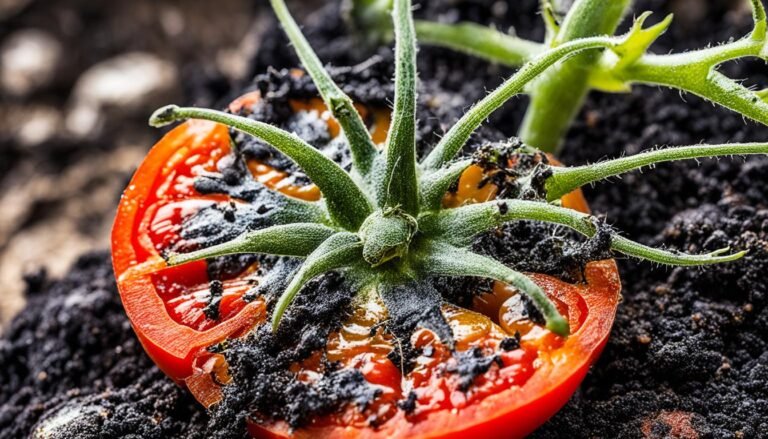
Ever see sunken spots on ripe tomatoes? This issue might be anthracnose, a common fungus. Let’s learn how this disease affects tomatoes and how to handle it.
What is Anthracnose in Tomatoes?
Causal Agent and Hosts
The fungus Colletotrichum phomoides causes anthracnose in tomatoes. This fungus isn’t just a tomato problem, it also hits crops like eggplants, peppers, and potatoes. It loves moist places.
Recognizing Anthracnose Symptoms
Fruit and Foliage Symptoms
Ripe tomatoes with anthracnose get sunken, circular spots. These spots can grow up to 1/2 inch and turn black inside. If it gets bad, they can invite other rot-causing germs.
This issue mainly shows up on ripe tomatoes. But, the fungus can start from the leaves and roots, then move to the fruits.
Conditions Favoring Disease Development
Anthracnose loves warm, wet weather. Water from above, leaf loss from early blight, and plants close to the ground all help it spread. The fungus waits out in seeds, soil, and old plants to come back the next season.
Cultural Control Methods
Good farming habits can cut down on anthracnose. Change where you grow tomatoes, use only clean seeds, and stop saving seeds from sick fruits. Cover the soil and support plants. Water the roots, not the leaves.
Anthracnose in Tomatoes: Chemical Control
Even with good habits, you might need fungicides. Special fungicides that are safe for the earth are available. Start spraying when the first fruits grow. Follow a spray plan based on weather to beat the disease.
Resistant Varieties and Integrated Pest Management
Choosing tomatoes that fight off anthracnose can help a lot. But the best way is to combine different methods in a smart plan. This is called Integrated Pest Management (IPM). It’s a strong and green way to deal with anthracnose.
Post-Harvest and Environmental Factors
After picking, be careful how you handle and store tomatoes. Keep them cool and safe from getting hurt. This helps keep anthracnose away and keeps your tomatoes fresh and good to sell.
Conclusion
Anthracnose is a big challenge for tomato growers. By knowing about it and using various methods, you can protect your tomatoes. Keep your tomatoes healthy, productive, and anthracnose-free with the right care.
Key Takeaways
- Anthracnose is a common fungal disease that affects ripe and overripe tomato fruit, causing serious losses in yield and marketability.
- The disease is caused by the fungus Colletotrichum phomoides, which can also infect other solanaceous crops like eggplant, pepper, and potato.
- Symptoms include small, sunken, circular spots on the fruit that can increase in size and lead to secondary rot.
- Warm, moist conditions, overhead irrigation, and proximity to the ground favor the development and spread of anthracnose.
- Implementing cultural control methods, using resistant varieties, and applying targeted fungicides are essential for managing this disease effectively.
What is Anthracnose in Tomatoes?
Causal Agent and Hosts
Anthracnose is a troubling disease in tomatoes. It’s caused by the fungus Colletotrichum phomoides. This seed-borne fungus infects many plants, including solanaceous crops and cucurbits.
This disease leads to big losses in tomato crops every year.
Research from Sabah, Malaysia, found 22 fungi causing anthracnose in tomatoes. They were all Colletotrichum species, with C. truncatum being the most common. Tests showed that C. truncatum could indeed cause anthracnose on tomato fruits.
Experts used genetic analysis to pin down C. truncatum as the anthracnose cause in tomatoes. This was a first in Malaysia.
Besides tomatoes, this fungus can also affect potatoes, peppers, and eggplants. It’s a big problem for farmers every year.
Recognizing Anthracnose Symptoms
Fruit and Foliage Symptoms
Anthracnose shows up mostly on ripe tomatoes. They get it where they touch old plants or the ground. You’ll see small, round dents up to 12 mm on the fruit. In the middle, it turns tan with dark circles around it. You might also find salmon-colored dust on the damage. As it spreads, the spots could cover a lot of the fruit. Or, they might burst open and get soft from other germs. Green tomatoes can also catch this, but it only shows up when they turn red, called a latent infection.
It’s not common, but the leaves can show brown spots with a yellow circle around them. If the roots are sick, they look brown and rotten inside. There are lots of tiny black dots under the skin, showing the fungus. This makes the plant grow slowly, turn yellow, and stop growing well.
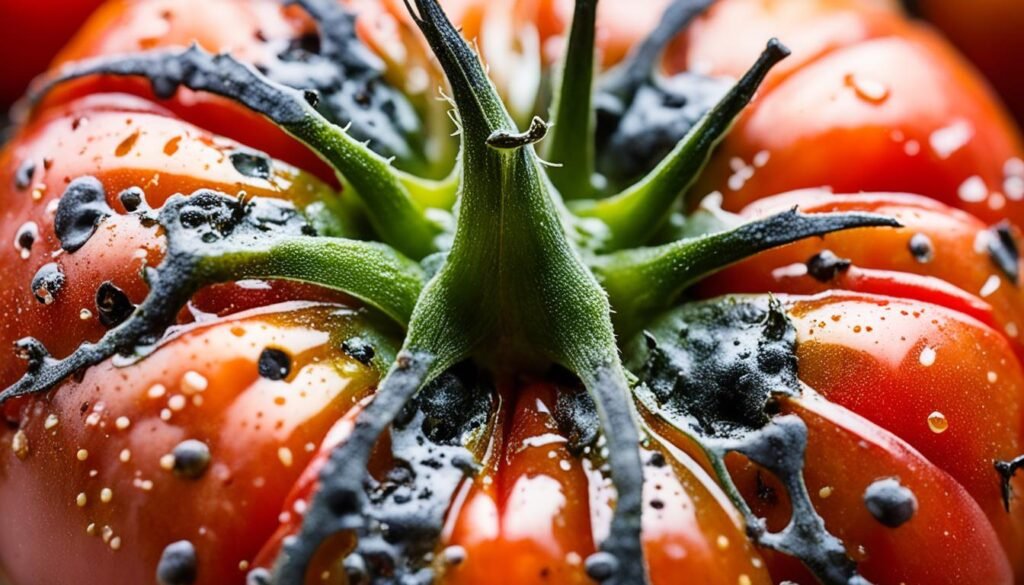
“Anthracnose can cause depressed circular lesions up to 5 inches in diameter on ripe fruit, which may develop concentric rings and black specks in moist weather.”
Conditions Favoring Disease Development
Anthracnose is a big problem for tomatoes, especially in certain climates. It’s caused by a fungus called Colletotrichum coccodes. This fungus can live on other plants too, like cucumbers and soybeans. It spreads through spores carried by rain. This disease loves damp places. The longer the tomato stays wet, the worse the problem gets.
The best temperature for anthracnose to grow on a tomato is between 20 and 24 degrees Celsius. But it can still infect in temperatures from 10 to 30 degrees Celsius. Tomatoes close to the ground are at higher risk. They get hurt by dirt moving in the wind. This is more common in soft, sandy soil. Water from above, like sprinklers, also makes the disease more likely. This is because it keeps the leaves and fruits wet.
High anthracnose problems often come with early blight caused by Alternaria solani. This shows that bad weather can help both diseases grow. Dealing with these diseases together is best.
Identifying and Treating Common Tomato DiseasesTomato Diseases and DisordersCommon Diseases of Tomatoes in Mississippi
“Proper identification of the causal agent is crucial for implementing effective management strategies against anthracnose in tomatoes.”
Cultural Control Methods
It’s important to use strong cultural methods to fight anthracnose, a harmful fungal disease that attacks tomato plants. You can rotate tomatoes with non-host plants to help. Do this for 4 to 6 years to lower the number of fungi in the soil. Make sure your plants get just the right amount of water and food. This stops them from growing too quickly and having cracks. Always check your plants before planting. Get rid of any with roots that look swollen or have galls. This helps avoid root knot disease. Try to switch your planting area from tomatoes to corn or other plants not liked by nematodes every 3 to 5 years. This can cut down on nematodes in the soil and keep root knot in check.
Viruses are very tough because you can’t treat plants after they’re sick. So doing what you can to stop this ahead of time is very important. Keep things clean to stop the spread of viruses and get rid of insects that spread them, like aphids and thrips. This will help lower the chances of getting cucumber mosaic and spotted wilt. Always use clean seed from good companies and plant in healthy soil to fight off bacterial canker.
Additional steps can be key in fighting anthracnose. Putting mulch around your tomatoes can stop spores in the soil from jumping onto the plants. Staking your tomatoes lets more air flow around them. This makes it harder for diseases to grow. Make sure your tomato plants get the right amount of water as their fruit starts to form. This can help prevent a problem called blossom-end rot.
Use lots of different methods together to fight diseases like anthracnose. Rotate where you plant, keep the plants fed and watered right, and keep things clean. All these steps help ensure your tomato plants are healthy and give a good crop.
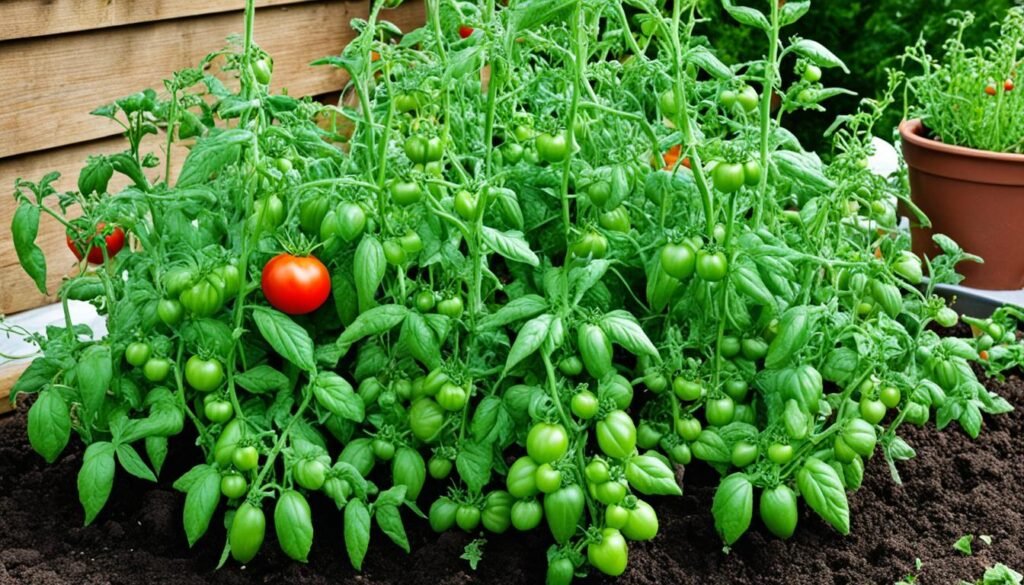
“Integrating cultural practices is essential for managing anthracnose and other tomato diseases effectively. By taking a proactive approach, growers can safeguard their crops and ensure a bountiful harvest.”
If you want more advice on fighting tomato diseases, check out reliable sources like the Shawnee County Extension Office, University of New Hampshire Extension, and The Topeka Capital-Journal.
Anthracnose in Tomatoes: Chemical Control
Controlling anthracnose in tomatoes needs a mix of things, and chemicals play a big part. One way is to spray fungicides when the first fruit grows. Doing this stops hidden infections and big crop losses.
Besides how you grow the tomatoes, using special plant medicines can help. Some tree and plant extracts kill the fungus causing anthracnose. This makes the tomatoes healthier.
Some tomatoes are made to fight off anthracnose better. This means you won’t need to spray as much. It’s good for the plants and the earth.
Daconil Fungicide from GardenTech® is great for many tomato diseases. It’s easy to use for just a few plants or many. This means anyone can keep their tomatoes safe.
Sevin® 3-in-1 helps too. It works fast on anthracnose and bugs. It fits well in taking care of the garden.
When you use chemicals, always follow the label. Timing is key for them to work best. Try to use them when the plants are not wet to stop anthracnose from spreading.
“Using chemicals with other methods and the right tomatoes can beat anthracnose. But, managing pests well for a long time is even more important.” – Integrated Anthracnose Management
By using chemicals, the right tomato types, and good farming, you can fight anthracnose. It’s a team effort for healthy tomatoes.
Resistant Varieties and Integrated Pest Management
Using resistant tomato varieties is great for fighting anthracnose, a major fungal disease in tomatoes. These special types, along with good farming methods like changing crops, keeping things clean, and watering right, are key parts of integrated pest management (IPM) against anthracnose.
It’s important to check your crops often and act fast to keep your tomatoes healthy. Looking for diseases like early blight and Septoria every week helps spot problems early. If you need to use fungicides, switching between different kinds helps stop the diseases from getting too strong.
- Pick disease-resistant cultivars that fight specific diseases such as Fusarium Wilt and Late Blight.
- Use cultural practices like changing what you plant, keeping things clean, and watering right to stop diseases.
- Check your plants often and use fungicides if you see problems, to keep things under control.
- Switch between different fungicides to prevent diseases from becoming too strong against treatments.
- Pick fungicides that let you harvest soon after using them to keep your control program strong.
Combine resistant tomato varieties with good farming and careful chemical use for a strong integrated pest management (IPM) plan. This helps a lot against anthracnose and other tomato diseases.
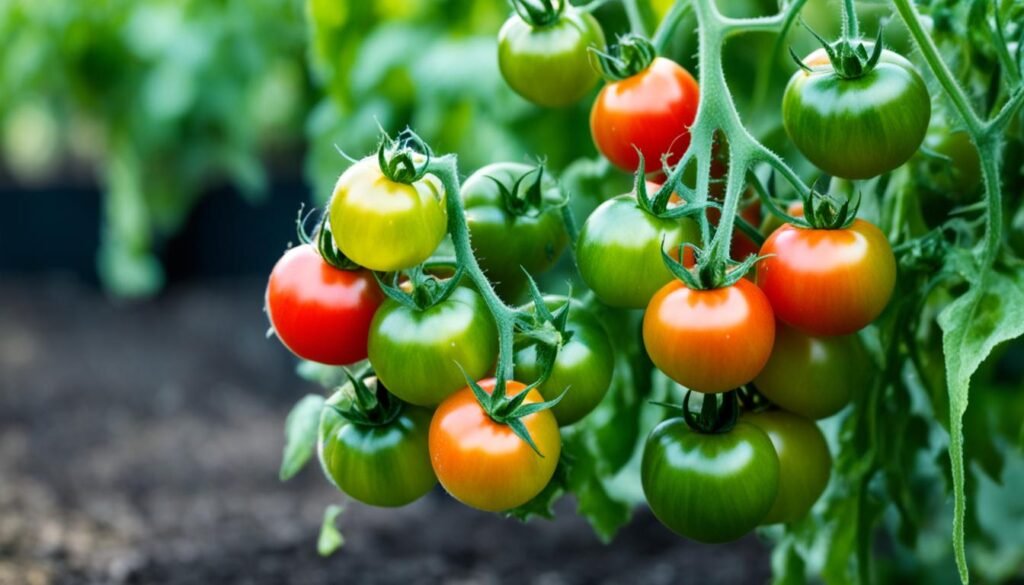
“Choosing the right disease-resistant cultivars and integrating them with cultural controls and targeted fungicide use is essential for long-term, sustainable management of anthracnose in tomatoes.”
Spotlight on Disease-Resistant Tomato Varieties
In the seed catalogs from 2018 to 2022, you find lots of disease-resistant tomato varieties against many diseases. Some cherry tomatoes fight off several diseases, like Fusarium Wilt and Root Knot Nematode. Others resist viruses such as Tobacco Mosaic Virus.
In Africa, growing tomatoes is big for eating at home and selling. The Anna F1 tomato in Kenya, for example, can do very well, giving a lot of tomatoes per acre and per plant. Plum tomatoes are best for making foods because they are firm. Cherry tomatoes are great for eating fresh because they are sweet and tasty.
Post-Harvest and Environmental Factors
Handling and storing tomatoes well after harvest is key to fighting anthracnose. The right temperature, humidity, and environment matter a lot in stopping the disease. Keeping the plants healthy from when they grow until after harvest helps a lot in stopping anthracnose.
Cuts and punctures can let harmful pathogens in during harvesting or handling. Green tomatoes resist decay better than ripe ones. Mature green tomatoes are the strongest against decay. Yet, if green tomatoes get too cold (below 55°F or 13°C), they get chilled and can more easily get fungi.
Too much water makes tomatoes easier targets for diseases like bacterial soft rot by Pectobacterium carotovorum. Warm and wet places where tomatoes are grown are favored by disease-causing pathogens. These pathogens can move fast in water and get inside tomatoes, starting infections through small wounds or cracks.
Taking care during post-harvest is also important in anthracnose management. Studies on postharvest anthracnose in dragon and Colletotrichum gloeosporioides that infects papaya show that using plant extracts, bio-agents, and oils works well. These methods help control the disease.
More research on chili anthracnose explains the different Colletotrichum species that cause anthracnose. This knowledge helps in knowing which fruits the disease can infect. It also guides in making plans to manage the disease for tomato farmers.
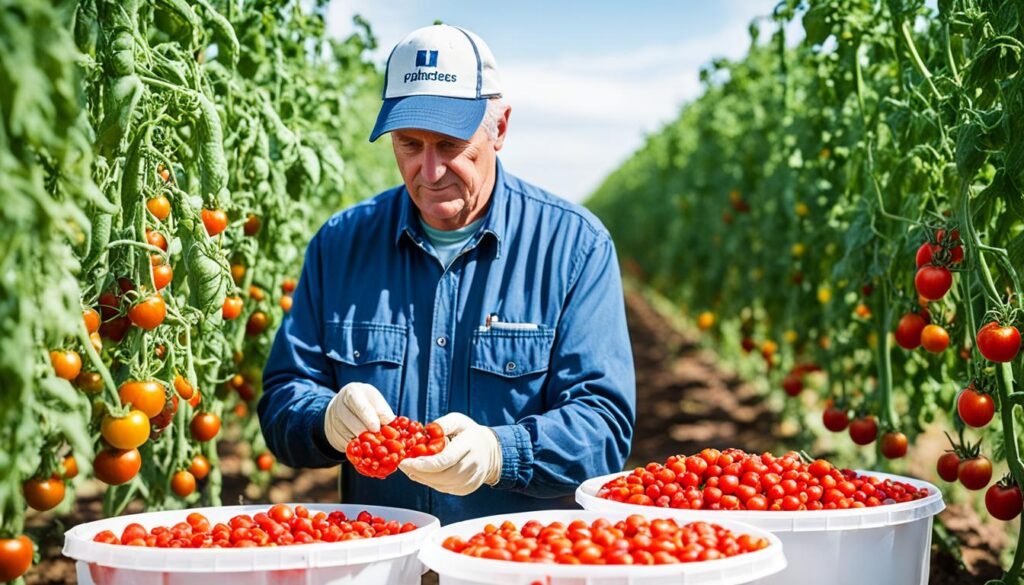
To wrap up, taking care after harvesting, along with the right storage and environment, is vital against anthracnose in tomatoes. Knowing how weather and handling affect the disease, and using good practices, helps farmers protect their crops.
Conclusion
Dealing with anthracnose in tomatoes needs a full plan. It involves using resistant types and the right fungicides wisely. This method is under the umbrella of integrated pest management. It’s crucial to know the disease, spot its signs, and apply many ways to prevent and control it. This helps tomato plants grow well all season and after harvest.
To grow tomatoes sustainably, you must take a complete disease management approach. Use cultural ways like changing where you plant, right watering, and letting the air flow. These and planting kinds that fight off disease can lower the chance of anthracnose and others. An integrated pest management strategy helps protect the plants without harming the environment. It supports farming that is good for the long term.
Doing well in growing tomatoes means preventing diseases from every angle. By sticking to the best tips and being careful, farmers can keep their tomatoes healthy. This is key to making tomato growing a success.
FAQ
What is Anthracnose in Tomatoes?
Anthracnose is a common rot on ripe tomatoes. It’s caused by the fungus Colletotrichum phomoides. This fungus can also infect other plants like potato, pepper, and eggplant. Even cucurbits and soybean aren’t safe.
What are the Symptoms of Anthracnose in Tomatoes?
Anthracnose shows up on ripe tomatoes. It often starts where the fruit touches the ground. You’ll see small depressions that grow up to 12 mm. These spots turn tan and have dark fruiting bodies.
Leaves might also show small, brown circles with yellow around them.
What Conditions Favor the Development of Anthracnose?
The fungus can live on other plants, debris, and some weeds. Rain spreads its spores. Wet fruit helps the disease grow. So, keeping tomatoes dry is key.
Don’t water overhead if you can help it. This raises the humidity, making plants wet.
How Can Anthracnose in Tomatoes be Controlled?
Start by using seeds from healthy tomatoes. Or, treat seeds with fungicide. Mix where you grow tomatoes with other kinds of plants. This helps break the disease cycle.
Use stakes to let air flow around tomato plants. Try not to water from above. Protect plants with fungicides and choose resistant tomato types.
How Do Post-Harvest Factors Affect Anthracnose?
After picking, how you handle tomatoes matters. The right temperature and humidity can prevent disease spread. Keep the environment clean and healthy. This fights off anthracnose.
Source Links
- https://ag.umass.edu/vegetable/fact-sheets/solanaceous-anthracnose
- https://blogs.cornell.edu/livegpath/gallery/tomato/anthracnose-on-tomatoes/
- https://www.ncbi.nlm.nih.gov/pmc/articles/PMC9865493/
- https://njaes.rutgers.edu/fs547/
- https://www.maine.gov/dacf/php/gotpests/diseases/tomato-problems.htm
- https://www.gardeningknowhow.com/edible/vegetables/tomato/tomato-anthracnose-treatment.htm
- https://www.thespruce.com/identify-treat-prevent-tomato-diseases-7153094
- https://www.shawnee.k-state.edu/lawn-garden/Tomato Cultural Practices.pdf
- https://www.cjonline.com/story/lifestyle/home-garden/2018/03/09/cultural-practices-reduce-tomato-diseases/13301238007/
- https://extension.unh.edu/blog/2019/05/tomato-troubles-cultural-practices-combat-insects-diseases
- https://www.gardentech.com/disease/anthracnose
- https://journals.aijr.org/index.php/ias/article/download/383/136/1255
- https://www.ncbi.nlm.nih.gov/pmc/articles/PMC7412205/
- https://ipm.cahnr.uconn.edu/what-you-need-to-know-about-tomato-ipm/
- https://www.vegetables.cornell.edu/pest-management/disease-factsheets/disease-resistant-vegetable-varieties/disease-resistant-tomato-varieties/
- https://plantvillage.psu.edu/topics/tomato/infos
- https://www.ncbi.nlm.nih.gov/pmc/articles/PMC9319655/
- https://www.ksre.k-state.edu/foodsafety/produce/guidance/docs/tomatodisease.pdf
- https://www.ncbi.nlm.nih.gov/pmc/articles/PMC10302910/
- https://extension.okstate.edu/fact-sheets/common-diseases-of-tomatoes-part-i-diseases-caused-by-fungi.html
- https://ask2.extension.org/kb/faq.php?id=277051
- https://extension.psu.edu/tomato-potato-late-blight-in-the-home-garden