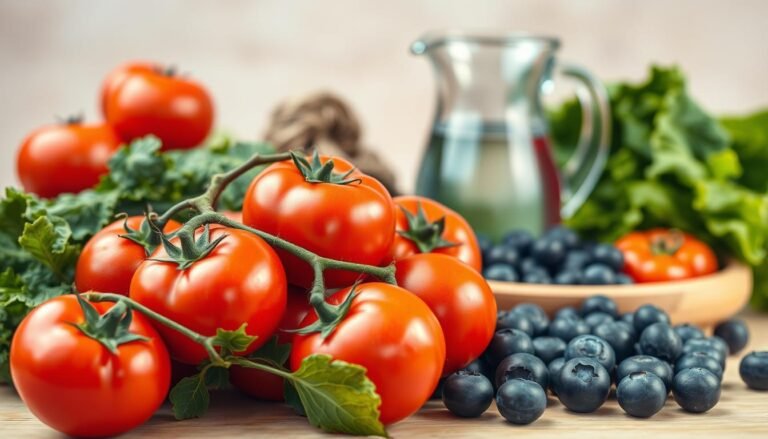
Tomatoes & Eye Health: What the Evidence Supports — and How to Eat Them
Age-related macular degeneration (AMD) is common: 11 million people in the United States have it. Your diet won’t “cure” AMD, but it can support retinal resilience over time by supplying antioxidant and anti-inflammatory nutrients. Tomatoes are useful here because they provide lycopene (a carotenoid), contribute vitamin C, and—crucially—tomato carotenoids become easier to absorb when tomatoes are cooked and eaten with fat, such as olive oil. Source Source Source
Key Takeaways
- AMD affects ~11 million people in the US; it’s a leading cause of vision loss in older adults. Source
- Research on nutrition and eye health focuses on nutrients involved in oxidation and inflammation, including vitamin C, vitamin E, carotenoids (including lutein/zeaxanthin and beta-carotene), zinc, plus omega‑3s (EPA/DHA). Source
- Tomatoes can contribute to this pattern, particularly through lycopene and vitamin C—but they are not a substitute for medical care. Source Source
- Cooking tomatoes with extra virgin olive oil has been shown to significantly increase plasma lycopene (both trans- and cis- forms) in a dietary intervention. Source
Nutritional Profile: Eye-Relevant Compounds in Tomatoes
Tomatoes are nutrient-dense and, in eye-health terms, most interesting for:
- Lycopene (a carotenoid pigment)
- Beta-carotene (a provitamin A carotenoid; not the dominant carotenoid in tomatoes, but present)
- Vitamin C (a water-soluble antioxidant)
A nutrition-and-eye-health review lists raw tomato (1 medium, ~123 g) = 17 mg vitamin C and tomato juice (1 cup, ~240 g) = 22 mg vitamin C, which is a practical reminder that tomatoes can meaningfully contribute to dietary vitamin C intake. Source
Tomatoes for Eye Health: What They Can (and Can’t) Do
The problem: why eyes are nutrition-sensitive
Compared to many organs, the eye is vulnerable to oxidative damage because of high metabolic activity and constant exposure to light. That is why research often centres on dietary antioxidants and anti-inflammatories. Source
The boundary: tomatoes support nutrition; they don’t treat AMD
AMD develops over years. The National Eye Institute is clear that AMD is a disease with stages and types (dry and wet) and that treatment depends on stage/type; food is part of risk reduction and overall health habits, not a standalone therapy. Source
The opportunity: tomatoes are an easy “daily vehicle” for carotenoids
A realistic goal is not “tomatoes prevent AMD”, but rather: tomatoes make it simpler to build a diet that regularly delivers carotenoids and vitamin C, alongside other proven nutrient sources (leafy greens, fish). Source
Bioavailability Matters: Why Cooking + Fat Changes the Equation
Carotenoids are fat-soluble, and the way you prepare tomatoes changes how much lycopene you absorb.
A clinical dietary intervention compared diced tomatoes cooked with and without extra virgin olive oil. Participants ate one tomato meal per day (470 g tomatoes), and the olive-oil version used 25 ml extra virgin olive oil. The olive-oil group saw an 82% increase in plasma trans‑lycopene and 40% increase in cis‑lycopene. The group without olive oil had no significant change in trans‑lycopene and a smaller increase in cis‑lycopene. Source
Practical meaning: if you want tomato carotenoids to “count”, tomatoes cooked with olive oil (or eaten with another healthy fat) is a defensible, evidence-based strategy. Source
Nutrient Mapping: Tomatoes vs the “Macular Pigment” Carotenoids
Tomatoes are often discussed alongside lutein and zeaxanthin, but it’s important to be accurate:
- Lutein/zeaxanthin are the carotenoids concentrated in the macula (macular pigment).
- The nutrition review highlights that the highest amounts of lutein/zeaxanthin in foods include kale and spinach (not tomatoes). Source
Use tomatoes as the base, and build meals that also include leafy greens (for lutein/zeaxanthin) and fish (for EPA/DHA) for a more complete “ocular nutrition” pattern. Source
Nutrient Table: What Each Compound Does (and the Claim Strength)
| Compound (entity) | Where it shows up in this article | What evidence supports | Best-supported framing |
|---|---|---|---|
| Lycopene | Tomatoes; increased absorption with olive oil | Human intervention shows higher plasma lycopene with olive-oil cooking | “Improves carotenoid exposure and absorption” Source |
| Vitamin C | Present in tomatoes/tomato juice | Reviewed as an antioxidant nutrient relevant to ocular tissue | “Supports antioxidant intake; part of broader pattern” Source |
| Lutein/zeaxanthin | Mentioned for macula; best sources are leafy greens | Described as macular pigment carotenoids; highest-food sources include kale/spinach | “Prioritise leafy greens; tomatoes complement” Source |
| AMD | Prevalence and disease context | NEI provides prevalence and disease overview | “Food supports risk reduction; medical care matters” Source |
Incorporating Tomatoes into Your Diet (Maximum Upside, Minimal Fuss)
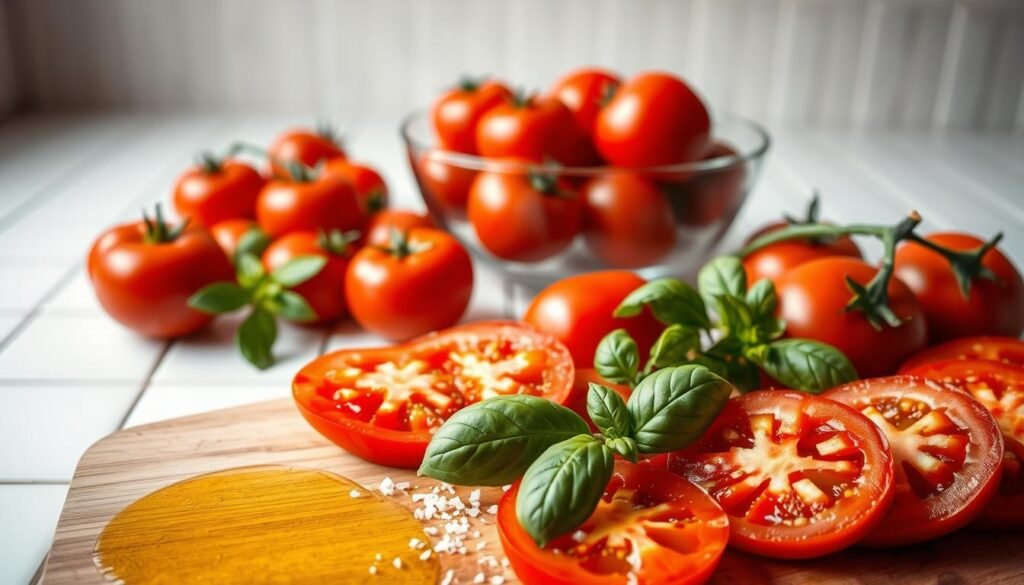
Serving ideas that improve carotenoid absorption
Use these templates (each pairs tomatoes with fat for carotenoid uptake):
- Tomato + olive oil + herbs (simple salad, room temperature)
- Tomato-based sauce finished with olive oil
- Roasted tomatoes with olive oil, garlic, and beans
- Tomato soup with a swirl of olive oil
The “tomatoes + olive oil” concept is not just culinary tradition; it has direct human evidence for increasing lycopene absorption. Source
Cooking techniques (what to prioritise)
- Gentle cooking (simmering/roasting) to soften the tomato matrix.
- Add fat (especially olive oil) during cooking or at serving.
- Avoid overpromising: you’re improving nutrient delivery, not guaranteeing disease prevention. Source Source
Tomatoes for Eye Health (Embedded Media)
https://www.youtube.com/watch?v=2eJOioFNd3I
FAQ
How do tomatoes support ocular wellbeing?
Tomatoes help you build an eye-supportive dietary pattern by contributing carotenoids (notably lycopene) and vitamin C, both discussed in nutrition-and-eye-health research focused on oxidative stress and inflammation. They are supportive foods, not medical treatment. Source Source
Can eating tomatoes prevent age-related macular degeneration?
No food can guarantee prevention. AMD is a complex condition with established risk factors and stages. However, the National Eye Institute notes that healthy habits—including eating healthy foods such as leafy greens and fish—may help lower risk or slow vision loss from AMD; tomatoes can be part of that overall dietary pattern. Source
What is the role of lycopene in this article?
Lycopene is included because tomato preparation affects absorption. A dietary intervention showed markedly higher plasma lycopene when tomatoes were cooked with extra virgin olive oil compared with tomatoes cooked without oil. Source
How can I preserve or improve nutrient absorption when cooking tomatoes?
For carotenoids, the key lever is bioavailability. Cooking tomatoes and consuming them with fat—especially olive oil—improves lycopene absorption in humans. Source
Are lutein and zeaxanthin found in tomatoes?
They can appear in mixed diets that include tomatoes, but the strongest food-source evidence for higher lutein/zeaxanthin intake points to leafy greens such as kale and spinach. Tomatoes are still valuable as a carotenoid-rich base, especially for lycopene. Source
Expert Verdict: Summary Checklist
- Anchor your meals with tomatoes regularly for lycopene and vitamin C support. Source
- For carotenoid uptake, choose cooked tomatoes + olive oil more often than raw tomatoes alone. Source
- Round out the “eye nutrient” pattern with leafy greens (lutein/zeaxanthin) and fish (EPA/DHA). Source
- If you have AMD or symptoms, use diet as support—seek eye-care guidance for diagnosis and treatment decisions. Source
Primary / Near-Primary Sources (Cited)
- National Eye Institute (NIH): Age-Related Macular Degeneration (AMD) — prevalence, stages, risk factors, treatment framing
https://www.nei.nih.gov/eye-health-information/eye-conditions-and-diseases/age-related-macular-degeneration - PubMed Central review: Nutrition and age-related eye disease (antioxidants/anti-inflammatories; nutrient set; food sources including vitamin C from tomatoes and lutein/zeaxanthin from leafy greens)
https://pmc.ncbi.nlm.nih.gov/articles/PMC3693724/ - PubMed clinical trial: Tomatoes cooked with olive oil increase plasma lycopene (dose + measured outcomes)
https://pubmed.ncbi.nlm.nih.gov/15927929/
Shakeel Muzaffar is a seasoned tomato gardener, SEO content strategist, and certified homoeopath.
As the founder of TomatoAnswers.com, he combines hands-on cultivation experience with evidence-based research from horticultural journals and peer-reviewed studies. His work focuses on the nutritional and therapeutic potential of tomatoes, blending practical gardening insights, natural health expertise, and AI-driven innovation to help readers grow smarter, eat healthier, and live more sustainably.