Tomatoes and Anti-Aging: The Complete Evidence-Based Guide for Youthful Skin
Tomatoes support healthy, youthful skin mainly through lycopene, a carotenoid antioxidant shown in human studies to reduce oxidative stress and UV-related skin damage. Cooking tomatoes improves lycopene absorption, especially when eaten with healthy fats like olive oil. Regular intake over weeks to months supports skin elasticity and hydration but does not replace sunscreen.
Why do some people seem to age more slowly than others? Genetics matter, but daily food choices play a big role. Among simple, affordable foods, tomatoes stand out for their strong scientific link to skin health and healthy ageing.
Tomatoes are rich in antioxidants, especially lycopene, which helps neutralise free radicals. Free radicals damage skin cells, speed up collagen breakdown, and contribute to wrinkles and uneven tone. Adding tomatoes to your diet is a practical way to support your skin from the inside.
Key Takeaways
- Tomatoes are one of the richest dietary sources of lycopene
- Cooked tomatoes provide more absorbable lycopene than raw
- Regular intake supports skin elasticity and hydration over time
- Antioxidants help reduce UV- and pollution-related skin damage
- Dietary support works best alongside sun protection
Understanding Skin Ageing: Causes and Effects
Skin ageing is a natural biological process, but external factors can speed it up. These factors mainly act by increasing oxidative stress and damaging collagen.
Internal Versus Environmental Factors
Intrinsic ageing is driven by genetics and natural biological changes. With age, collagen and elastin production slows, reducing firmness and moisture.
Extrinsic ageing is influenced by lifestyle and environment. Sun exposure, air pollution, smoking, and poor diet increase free radical formation, leading to faster visible ageing.
The Role of Sun Exposure and Free Radicals
Ultraviolet radiation penetrates the skin and generates free radicals. These unstable molecules damage collagen fibres and weaken the skin’s structure. Over time, this results in wrinkles, sagging, rough texture, and pigmentation.
Antioxidant-rich foods help neutralise free radicals before they cause long-term damage. This is where tomatoes and other plant foods become important.
Nutritional Ingredients for Vibrant, Youthful Skin
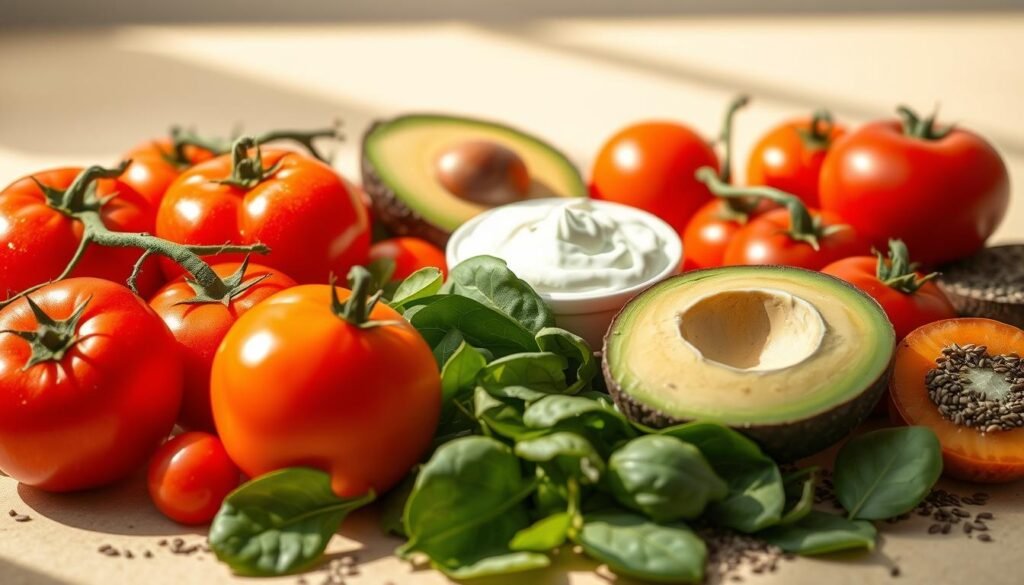
Healthy skin depends on steady access to specific vitamins and antioxidants. These nutrients support collagen production, barrier strength, and cell repair.
Essential Vitamins and Antioxidants
- Vitamin C supports collagen synthesis and protects against oxidative damage
- Vitamin E strengthens the skin barrier and helps retain moisture
- Vitamin A supports skin cell turnover
Carotenoids, including lycopene, beta-carotene, and lutein, accumulate in the skin and help protect against UV-related stress.
Research-Backed Nutrients and Collagen Support
Collagen maintenance depends on antioxidants and vitamin cofactors. Diets rich in fruits and vegetables are consistently linked with better skin elasticity and hydration.
| Nutrient | Main Benefit | Food Sources |
|---|---|---|
| Vitamin C | Collagen synthesis | Citrus fruits, berries, peppers |
| Vitamin E | Barrier protection | Nuts, seeds, spinach |
| Carotenoids | UV protection | Tomatoes, carrots |
Tomatoes for Anti-Aging: How Tomatoes Support Skin Health
The Role of Lycopene and Carotenoids
Lycopene is one of the most potent dietary antioxidants found in tomatoes. It helps reduce oxidative stress caused by sunlight and pollution, two major contributors to premature skin ageing.
Carotenoids accumulate in the skin over time, improving its natural resistance to UV-induced damage.
What the Scientific Evidence Shows (Human Studies)
Human dietary intervention studies show that regular intake of lycopene-rich tomato products can reduce UV-induced skin redness (erythema) after several weeks of consistent consumption.
Other studies confirm that processed tomato products (paste, sauce) provide higher lycopene absorption than raw tomatoes, especially when eaten with fats like olive oil.
Cooking Methods and Bioavailability
Heat breaks down tomato cell walls, making lycopene easier to absorb. Tomato paste, sauce, and cooked tomatoes contain more bioavailable lycopene than raw tomatoes.
Eating tomatoes with healthy fats further improves absorption.
What Tomatoes Can and Cannot Do
Dietary lycopene strengthens the skin’s internal antioxidant defences, but it does not replace sunscreen or sun-safe behaviour. Tomatoes work best as part of a combined strategy.
Dietary Intake Versus Topical Use
Most proven benefits of tomatoes come from dietary intake rather than topical application. Eating tomatoes supports skin repair from within.
Integrating Tomatoes into Your Daily Diet
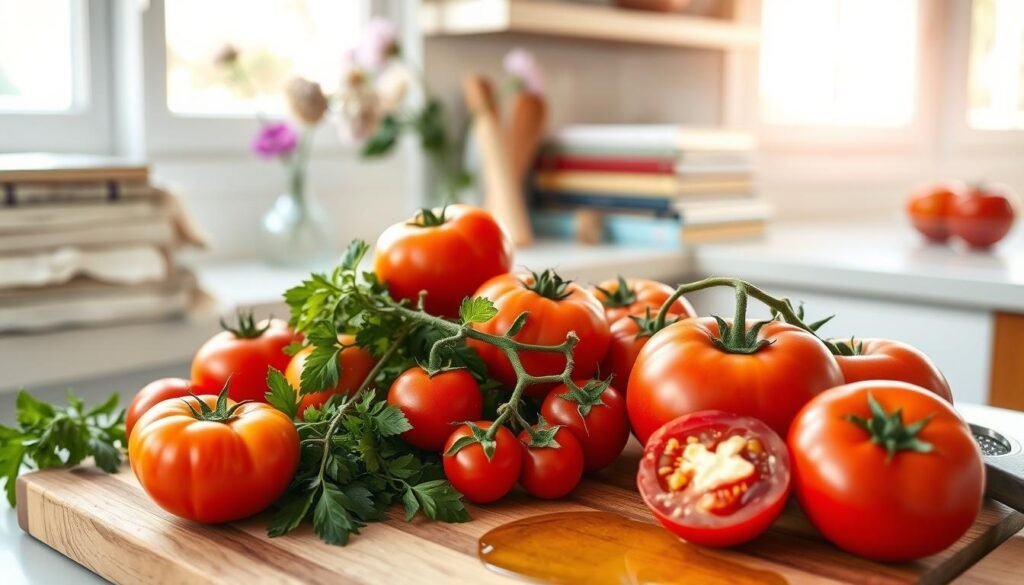
Simple Ways to Eat More Tomatoes
| Dish | Why It Helps |
|---|---|
| Tomato soup | High lycopene availability |
| Roasted tomatoes | Improved antioxidant absorption |
| Salads with olive oil | Better carotenoid uptake |
How Long Does It Take to See Benefits?
Human studies observed improvements after weeks to months of regular intake. Consistency matters more than short-term increases.
Balancing Intake
Tomatoes are naturally acidic and may cause discomfort for some people. Pairing them with fibre-rich foods or healthy fats can improve tolerance.
Synergistic Foods for Stronger Skin Protection
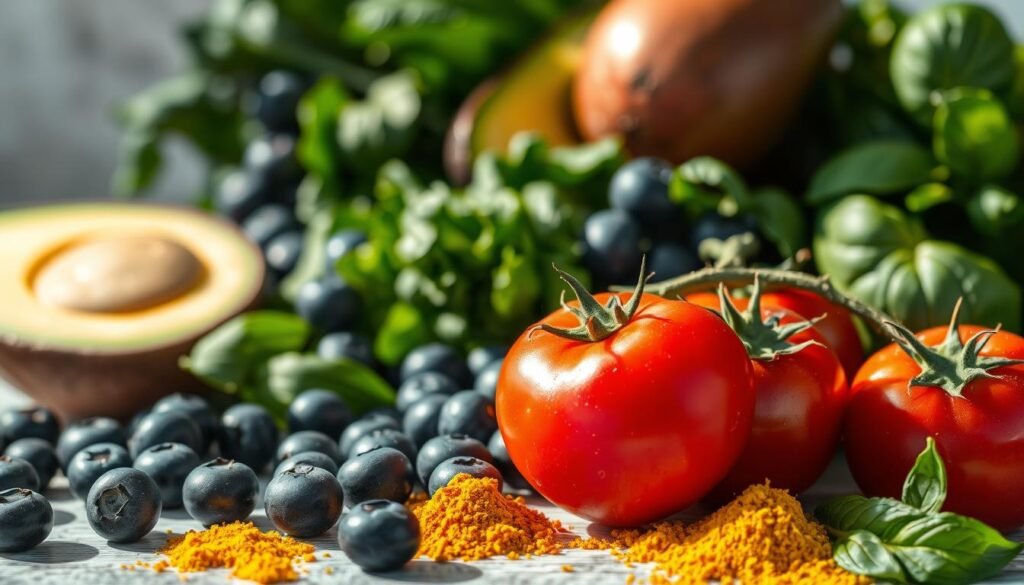
Tomatoes with Green Tea and Turmeric
Green tea polyphenols reduce inflammation and oxidative stress. Turmeric contains curcumin, which supports skin elasticity. Together with tomatoes, they provide broader antioxidant protection.
Other Supportive Foods
| Food | Main Benefit |
|---|---|
| Tomatoes | Lycopene-based protection |
| Green tea | Polyphenols |
| Turmeric | Anti-inflammatory support |
| Berries | Antioxidant diversity |
| Nuts | Skin hydration |
Who Should Be Careful With Tomato Intake?
Tomatoes are safe for most people. However, their acidity may trigger discomfort in people with acid reflux, and their potassium content may matter for those on potassium-restricted diets.
Conclusion
Healthy skin ageing depends on more than skincare products. A diet rich in antioxidants, carotenoids, and vitamins plays a key role in protecting collagen and reducing oxidative stress.
Tomatoes, especially when cooked and paired with healthy fats, are among the most effective dietary sources of skin-protective antioxidants. Combined with sun protection and balanced nutrition, they support long-term skin resilience and a youthful appearance.
FAQ
Do tomatoes really slow skin ageing? They help reduce oxidative stress, a major contributor to premature ageing.
Are cooked tomatoes better than raw? Yes. Cooking significantly improves lycopene absorption.
How often should tomatoes be eaten? Regular inclusion in meals provides steady antioxidant support.
Do tomatoes replace sunscreen? No. Dietary protection complements but does not replace sun protection.
Sources
- https://pubmed.ncbi.nlm.nih.gov/20854436/
- https://pubmed.ncbi.nlm.nih.gov/15927929/
- https://pmc.ncbi.nlm.nih.gov/articles/PMC7996133/
- https://pubmed.ncbi.nlm.nih.gov/36606553/
- https://www.healthline.com/health/tomato-benefits-for-skin